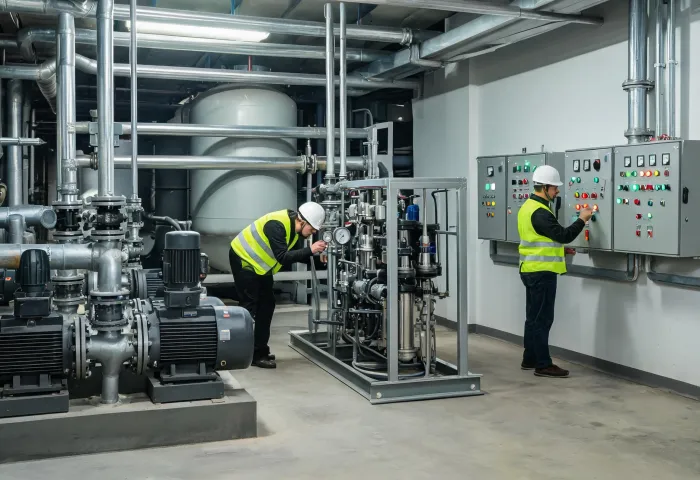
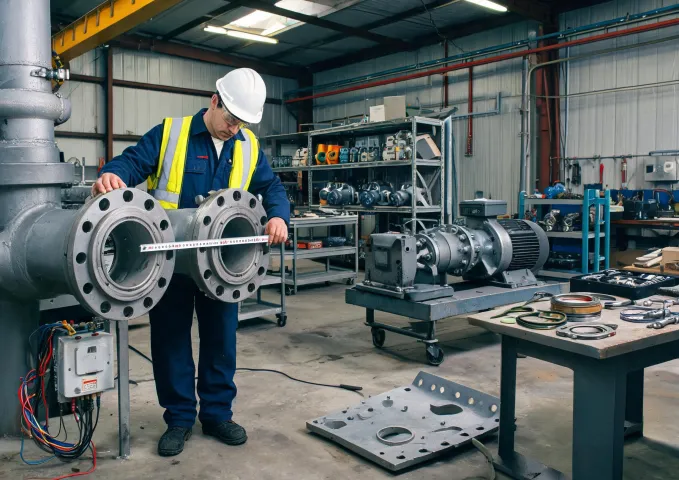
Transfer, dosing, and wastewater stages
Design flow and total dynamic head need to be checked against the operating range, not treated as a single point. Suction level, available NPSH, solids, liquid temperature, chemical exposure, minimum velocity, and wet-well cycling influence pump type and materials. A duty/standby arrangement can protect continuity, but valve logic, alternating control, common-header behavior, and independent isolation still require definition. Motor rated voltage, frequency, ingress protection, starter method, and control-panel SCCR belong in the same record.
Pressure boosting and hydronic circulation
Domestic-water pressure, top-floor static head, peak demand, low-flow periods, acoustic limits, and plant-room access shape a booster package. Variable frequency drive control can stabilize pressure, while bypasses and redundancy add components and testing obligations. Circulation selection also depends on temperature, fluid treatment, balancing strategy, and minimum flow. Building-management communication should name the required points and protocol rather than state only that integration is needed.
Cooling water and industrial services
Process utility pumps may face continuous duty, temperature variation, contamination, seal constraints, vibration limits, and planned maintenance windows. Material compatibility must be checked against the actual liquid and cleaning regime. Conservative derating can improve thermal margin at high ambient temperature, but it can increase footprint and initial cost. High utilization can reduce size, yet leaves less margin for fouling, voltage variation, or future duty changes. The project owner must choose the acceptable balance.