Grundfos Water Pump Buying FAQ: Diagrams, Bulk Orders, and How to Pick a Wholesale Supplier
2026-09-28 · Sarah Okonkwo
-
How do I read a Grundfos water pump diagram before I order?
-
How do I choose a water pump for wholesale without over-speccing?
-
What should I check in a bulk industrial pump quote besides the price?
-
How do I brief a supplier on an air filter catalog request?
-
How do I tell a pump specialist from a generalist?
-
Why does the cheapest pump in a bulk quote often cost the most?
-
What paperwork should I demand before approving the order?
I've been handling MRO purchasing for a 140-person industrial services company since 2021 — roughly $400K a year spread across nine vendors. Pumps are the category that has cost me the most sleep, mostly because the same seven questions keep coming back: what does this model code actually mean, why are the bulk quotes so far apart, and is that diagram detailed enough to order from.
Below are the answers I wish someone had handed me straight, two wrong POs ago (one on head pressure, one on flange material). No long preamble — here's what this covers:
- How to read a Grundfos water pump diagram before you order
- How to choose a water pump for wholesale without over-speccing
- What to check in a bulk industrial pump quote besides the number
- How to brief a supplier on an air filter catalog request
- How to tell a pump specialist from a generalist
- Why the cheapest pump in a bulk quote often costs the most
- What paperwork to demand before you approve the order
How do I read a Grundfos water pump diagram before I order?
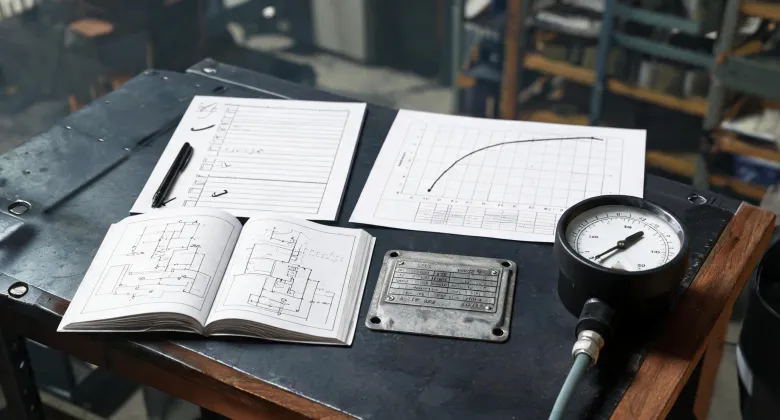
Let me be upfront: I'm not an engineer. My job is to make sure every spec on the sheet matches a real requirement, and to stop and ask when it doesn't. Here's what I check on every pump diagram now, no exceptions:
- Flow and head — gallons per minute (or m³/h) against feet (or meters) of head, read at the duty point, not at the pump's maximum. The duty point is where your system actually runs.
- Connection size and type — flanged, threaded, grooved. This is where things quietly go wrong.
- Power supply — voltage, phase, frequency, and whether the motor is variable-speed or fixed.
- Materials — casing, impeller, seal. Cast iron versus stainless versus bronze changes both the price and the application.
- Physical dimensions — baseplate footprint, port-to-port length, overall height with the motor mounted.
If a diagram doesn't carry those, it's a marketing image, not an engineering drawing. Ask for the full dimensional sheet. I've never once been turned down for asking.
If I remember correctly, a wrong flange material cost us somewhere around $650 in rework back in 2023 — completely avoidable, and it came down to one line of small print I skimmed.
How do I choose a water pump for wholesale without over-speccing?
Start with the job, not the model number. I collect the same six facts before I even open a catalog:
- Required flow and head at the actual duty point
- Fluid — clean water, glycol mix, wastewater, temperature range
- Duty cycle — continuous or intermittent
- Installation constraints — footprint, noise limits, indoor or outdoor
- Control expectations — fixed speed, or does it need to modulate
- Redundancy — one pump, or duty plus standby
What I got wrong early on was buying the highest-spec pump on the list "just in case." When I compared the two approaches side by side over a full year — same vendor, same site, different specs — I finally understood why oversizing hurts twice: you pay more upfront, and the pump runs off its best-efficiency point for the rest of its life.
For wholesale specifically, consistency across the batch matters more than chasing the theoretical best model. If you're buying for multiple sites, matching pump families means shared spare parts, shared seals, and one set of maintenance procedures. That's worth more than a marginal efficiency gain on paper.
What should I check in a bulk industrial pump quote besides the price?
Here's what you need to know: the quoted unit price is rarely the full picture. Seven things I now compare line by line:
- Quote validity window — 30 days or 90 days changes your exposure on a long approval cycle
- Incoterms — who pays freight, duties, and unloading
- Minimum order quantity and price breaks — the break points are often negotiable at volume
- Lead time in writing, with a stated consequence for missing it
- Warranty start date — from shipment or from installation? That gap can eat six months
- Spare parts availability — can you buy seals and impellers separately, and at what lead time
- Packaging — crating and palletizing fees show up late and they're not small
Save $40 a unit by skipping proper crating, and you can easily spend $300 per damaged pump on replacement and re-shipping. I've watched that movie.
How do I brief a supplier on an air filter catalog request?
Off-topic? Not really. Filters are the category that has burned me more than pumps, and it's always the same reason: cross-reference tables.
When you request an air filter catalog, ask for these five fields on every line item, not just a part number:
- Dimensions — outer diameter, inner diameter, height, in both metric and imperial
- Filtration rating — MERV or ISO 16890 class, stated in a form you can compare
- Media type and end-cap construction
- The supplier's own part number and the OEM number it's intended to replace
- Whether the cross-reference is "exact fit" or "functional equivalent"
That last one matters. "Equivalent" can mean it filters similarly but doesn't seat the same way. Ask which one you're getting, on every line.
How do I tell a pump specialist from a generalist?
Honestly? Listen for the word "no."
During a supplier review last year, one vendor flat-out told me that chemical-duty seals weren't their strength and pointed me to a competitor who does it better. They got the rest of the order, and they've had it since. Meanwhile, a supplier who said "sure, we can do all of that" shipped the wrong mechanical seal and we burned three weeks untangling it.
The vendor who said "this isn't our strength — here's who does it better" earned my trust for everything else. I'd rather work with a specialist who knows their limits than a generalist who overpromises on every RFQ.
This connects to something concrete: per FTC advertising guidance (ftc.gov, Business Guidance on Advertising, accessed April 2026), product claims must be truthful and substantiated with evidence. So when a supplier says a pump or filter is "compatible with" a specific model, they should be able to hand you the cross-reference documentation behind that claim. If they can't, treat the claim as marketing, not engineering.
Why does the cheapest pump in a bulk quote often cost the most?
Here's the counterintuitive one. On a bulk quote, the lowest unit price usually optimizes for the wrong thing: purchase cost, not operating cost.
Three variables usually explain the gap:
- Efficiency class — motor and hydraulic efficiency ratings are now regulated in most major markets, and a lower tier costs you continuously in power draw
- Duty cycle assumption — a pump running 6,000 hours a year is a very different financial animal than one running 800
- Failure cost — unplanned downtime, emergency freight, and labor dwarf the price difference on the pump itself
A unit that looked $380 cheaper got us to roughly $900 all-in once you added the downtime, the overtime callout, and next-day freight on the replacement. The "budget" choice looked smart until the seal let go in month seven.
I'm not saying buy the most expensive option. I'm saying run the number over the expected service life before you decide the cheap one is cheap.
What paperwork should I demand before approving the order?
Six documents, every time, no matter how long we've worked together:
- Written quote with dated validity and full specifications
- Dimensional drawing for the specific model
- Warranty terms in writing, including the start trigger
- Compliance documentation for your market — CE, UL, or whatever your jurisdiction requires
- Invoice and tax registration details, confirmed before the order ships
- Delivery terms with named Incoterm and a stated delivery window
That fifth one is not paranoia. In 2020, right after I took over purchasing, I found a genuinely great price from a new vendor — roughly $1,800 below our regular supplier on a batch order. They couldn't issue a proper invoice, handwritten receipt only. Finance rejected the expense report and it came out of the department budget. Now I verify invoicing capability before I place anything.
I should add that the dollar figures in this piece are my own recollections from internal records, not audited numbers — treat them as directional. And that's it, no wrap-up paragraph. If you're new to buying pumps in bulk, get the drawing first, get the warranty terms second, and the rest usually sorts itself out.

Sarah Okonkwo
Sarah Okonkwo is an electrical test and measurement analyst specializing in multimeters, clamp meters, installation testers, sensors, and power-quality monitors. She uses IEC 61010-1 and IEC 61010-2-032 safety requirements for test and current-clamp equipment, then applies IEC 61000-4-30 methods to power-quality parameters while examining category ratings, accuracy, resolution, bandwidth, harmonics, voltage events, and uncertainty. She helps technicians and buyers select instruments, set up safe measurements, interpret readings, and diagnose faults within the intended circuit environment.