Grundfos Water Pump Sourcing Checklist: 6 Checks Before You Approve an Industrial Order
2026-09-07 · Rebecca Sloan
-
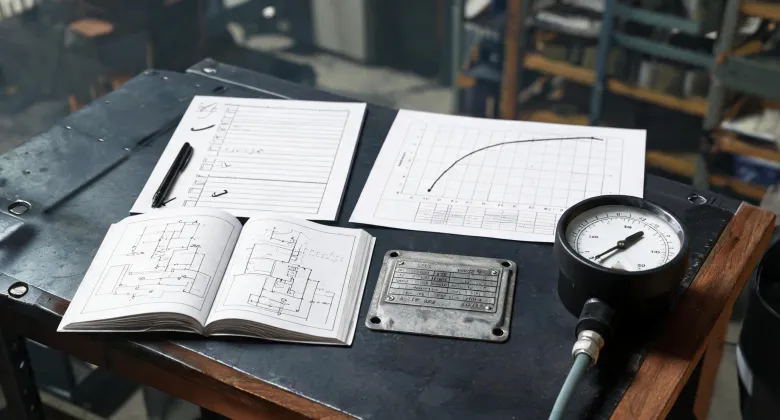
The six-step Grundfos water pump sourcing checklist
-
Step 1: Verify the full nameplate string, not just the pump family
-
Step 2: Use the Grundfos water pump diagram to verify parts and connections
-
Step 3: Confirm OEM status: “Fits Grundfos” is not the same as Grundfos
-
Step 4: Map water pump compliance requirements to your application
-
Step 5: Review documentation before you release payment
-
Step 6: Get warranty and support terms in writing, especially on small orders
-
Step 1: Verify the full nameplate string, not just the pump family
-
Mistakes we still see
-
Bottom line
I'm a quality and brand compliance manager at an industrial pump supplier. I review every unit before it reaches a customer—roughly 350 orders a year, from single replacement pumps to plant-wide lineups. In 2024, I rejected about 11% of first deliveries from vendors. Almost none of those rejections were because the pump failed to run. They were spec mismatches, missing paperwork, and compliance gaps that stayed invisible until the crate was on our dock.
This piece is for anyone sourcing a Grundfos water pump for industrial use, whether you're a plant manager or running a small workshop that depends on one pump staying alive. There are six checks below, and each one ends with a concrete checkpoint. We run all six regardless of order size. If anything, a one-pump order deserves more care, not less, because the buyer has less slack if something goes sideways.
The six-step Grundfos water pump sourcing checklist
Step 1: Verify the full nameplate string, not just the pump family
From the outside, ordering a “CR10-3” looks like enough information. The reality is that Grundfos builds many configurations within a single pump family. A CR10-3 can carry different seal codes, impeller trims, connection standards, or motor windings. On a current unit, the full product code looks something like CR10-3 A-FGJ-A-E-HQQE. Every block in that string represents a mechanical or electrical decision.
Also check voltage, phase, frequency, rated current, and duty cycle on the nameplate. Two pumps can look identical from the front and behave completely differently at the motor terminals. A 50 Hz unit designed for Europe will not perform correctly on a 60 Hz supply in North America unless the motor option matches.
In our Q1 2024 quality audit, a vendor sent us 24 pumps with the wrong phase code. The order asked for 380 V; the units were labeled 460 V. The vendor said it was “the same model family,” which was technically true and completely useless. We rejected the batch and they redid it at their cost. Now every PO includes the full nameplate string as a required field, plus a photo of the actual nameplate before shipment.
Checkpoint: ask for the full product code and a nameplate photo at quotation stage. If a supplier can only confirm “it’s the right Grundfos model,” push harder.
Step 2: Use the Grundfos water pump diagram to verify parts and connections
Search for “grundfos water pump diagram” and you get dimensional drawings, exploded views, and parts lists. The diagram that matters is the one for your exact product code. Use it to check the hydraulic section, motor frame, coupling arrangement, and flange standard.
A mistake we have seen more than once is pairing a pump head from one family with a motor from another because the flange dimensions “looked fine” on a catalog page. The shaft alignment was off, and the coupling wore out within months. Flange standards also matter: PN10, ANSI 150, and JIS can all look like a round flange with bolt holes until you measure the face and hole spacing. The diagram catches that before you bolt anything into your pipework.
Exploded views are useful for another reason. They show which service parts fit, like the mechanical seal kit number, which changes with shaft diameter and seal material. A vendor who quotes a “standard seal kit” without referencing a diagram item number is guessing.
Checkpoint: include the diagram number or drawing reference on your PO. When the product arrives, confirm the part markings on the hydraulic section match the diagram.
Step 3: Confirm OEM status: “Fits Grundfos” is not the same as Grundfos
This is where online search gets tricky. Search results for a Grundfos water pump include genuine new units, reconditioned units, and third-party pumps designed to replace Grundfos units. All can be legitimate if clearly labeled. The problem is when they are mixed together and the buyer assumes everything is the same.
If your application calls for a genuine Grundfos, say exactly that in writing. Do not write “Grundfos-compatible.” What I mean is that compatible has a different meaning to a maintenance manager than to a salesperson. A compatible pump may do the same hydraulic job, but it will not have the same materials, documentation, or warranty path.
The same logic applies to other product categories. When someone is sourcing an OEM fuel pump for a fleet, the word OEM means the component comes from the manufacturer that originally supplied that part on the engine—not a remanufacturer, and not a brand that happens to bolt onto the same bracket. We ask the same questions on fuel pump OEM orders that we ask on pump orders: manufacturer name, original part number, packaging markings, and country of origin.
Some quick verification steps for a genuine Grundfos at receipt: scan the data matrix on the nameplate, confirm the serial on the unit matches the packing list, and compare the pump weight against the product data sheet. Weights are not an official test, but a current genuine unit has a consistent production weight. If the markings match and the unit is noticeably heavier or lighter, find out why before you install it.
Gray market is also worth understanding. A pump can be genuine and still be intended for a different region, with a different voltage or motor code. If the deal looks too good, ask where the unit was originally shipped and confirm the product code matches your region.
Checkpoint: get the supplier to state genuine status and product origin in writing, and verify the unit’s markings at receipt.
Step 4: Map water pump compliance requirements to your application
Step four is the one most people skip. They assume a Grundfos pump is automatically compliant because the brand is well known. To be fair, Grundfos has more compliance resources than most manufacturers. But compliance is a property of the specific configuration in your specific application, not a feature of the entire brand.
If the pump will handle drinking water, materials that contact water typically need certification such as NSF/ANSI 61. Grundfos offers specific configurations for domestic water and water distribution. The certificate must list your exact model and option code. A certificate for the same family but a different model is not evidence; it’s marketing.
Energy efficiency adds another layer. Many industrial pump classes are covered by US DOE efficiency regulations and, outside the US, by EU Minimum Efficiency Index (MEI) rules. If a rebate or project specification depends on efficiency, you need the documented efficiency data for your exact pump. “It’s an efficient Grundfos” cannot be entered into an energy modeling spreadsheet.
Then local codes can add backflow prevention, enclosure rating, or motor protection requirements. Municipal inspectors sometimes require the compliance file before the pump is placed into service. The file isn’t extra paperwork when that happens; it’s a condition of startup.
Checkpoint: draft a compliance requirement list before you get quotes. Include it in the RFP and check the quoted model’s certificate against that list.
Step 5: Review documentation before you release payment
The documentation set is part of the product. For an industrial Grundfos order, we expect to see the following, tied to the serial number of the unit:
- factory test report or production test certificate
- declaration of conformity, when applicable
- compliance certificates naming the exact model code
- performance curve with the specified operating point marked
- commercial invoice or origin document
The most common gap in our audits was certificates referencing a similar model instead of the exact model on the delivery, and test reports where the serial number did not match the pump. In 2022, I implemented a verification protocol for incoming vendor documentation. First-pass documentation acceptance went from about 82% to 96% by late 2024. The pump itself almost always arrived. What arrived inconsistently was the evidence that the pump was what we approved.
Checkpoint: request documents at quotation stage, and make delivery of final documents a condition in the PO. If a supplier pushes back on that, you’ve learned something before spending money.
Step 6: Get warranty and support terms in writing, especially on small orders
The last step is where small-order buyers get treated like an afterthought. Our stance is simple: a single replacement pump should get the same documented answers as a fifty-unit project. Today’s one-pump order might be next year’s plant retrofit, and even if it isn’t, it deserves a straight answer.
The phrase “Grundfos warranty applies” is not a warranty document. We want the quotation to state exactly: whether the unit is being supplied through a distribution channel that supports warranty claims, how the serial is tracked, which party files the claim, and what the response commitment is.
There is a real difference between “we will file a claim on your behalf” and “we accept responsibility if the claim is denied.” Both arrangements are workable. But you should not discover which one you have only after a pump fails.
As a supplier, we treat warranty wording as a review item before we place the order. We’ve quoted a single pump to keep a dairy chiller running and spent the same effort on documentation as we would on a larger order. That customer came back two years later with an $18,000 upgrade. Small doesn’t mean unimportant; it means potential.
Checkpoint: ask for warranty language in writing before you pay. If the vendor’s answer is vague, that is a red flag.
Mistakes we still see
Even with a good process, old habits sneak back. Some of the recurring ones:
Ordering by pump family instead of full model code. That mistake repeats because it is easy to believe that all CR pumps are basically the same. Then the flange standard or voltage is wrong at installation.
Treating “OEM” as a loose term. It isn’t. On water pumps or fuel pump OEM sourcing, OEM has a specific meaning. If you need original manufacture, specify it and ask for proof. If you buy a reconditioned or third-party unit knowingly, fine—but the label should be clear before the sale, not after.
Skipping compliance documents until startup. We get calls from customers under inspection deadlines who need a certificate they never requested. The pump is sitting in their warehouse, and the project is delayed because the file is incomplete. That’s not a pump failure; it’s a procurement failure.
And the classic one: saving money on equivalent components. We once saved $180 on a batch of ten pumps by approving an “equivalent” mechanical seal. The supplier never mentioned the spring material differed from the Grundfos spec. Four seals were weeping within six months. Replacing each cost around $600 including labor and downtime. Net loss was roughly $2,200 to save $180. I am not against third-party parts in the right application, but equivalent means a material certificate, a dimensional drawing, and a pressure/temperature rating—not a photo that looks similar.
Another recurring problem is vague language about delivery. We told a vendor we needed the pumps “as soon as possible.” They heard a soft expectation. The pumps arrived two weeks after our planned outage ended. Nobody misbehaved; we just used words without meaning. Now every order carries an explicit required-on-site date. Treat the date as a specification, not a detail.
Bottom line
Industrial pump sourcing comes down to verification discipline. Genuine Grundfos equipment is reliable; the risk sits in the gap between what you asked for and what gets delivered. Run the full nameplate string, cross-check the Grundfos water pump diagram, confirm OEM status, map compliance requirements, review the documentation, and lock warranty terms in writing. Those six checks apply regardless of order size.
Our rejection rate for inbound units was 11% in 2024. This year it is trending around 4%. The difference was not a different pump supplier or a better price. It was the checklist.

Rebecca Sloan
Rebecca Sloan is a power distribution and protection analyst specializing in circuit breakers, switchgear, contactors, fuses, surge protective devices, and coordination. She applies IEC 60947-2 breaker requirements, IEC 60269 fuse characteristics, and IEC 61643-11 tests while examining rated voltage, breaking capacity, time-current curves, selectivity, and prospective short-circuit current. She helps engineers and buyers compare protective devices against documented fault levels, installation conditions, maintenance access, and continuity priorities.