Grundfos Water Pump vs. Private Label: An Honest B2B Comparison Guide
2026-09-24 · Elaine Zhou
-
I Started Keeping a Failure Log Because of One Air Filter Order
-
The Two Sides, and Why I Compare Them This Way
-
Dimension 1: Documentation Integrity (the Grundfos Water Pump Diagram Problem)
-
Dimension 2: Cost Structure (Where the Math Gets Messy)
-
Dimension 3: Compliance, Warranty, and Legal Risk
-
Dimension 4: Lead Time, MOQ, and Inventory Risk
-
So Which One Should You Actually Pick?
I Started Keeping a Failure Log Because of One Air Filter Order
I've been handling industrial parts procurement for about 11 years. In my first year (2017), I made the classic rookie call: a private-label air filter matched the OEM part number, so I assumed it would drop in. It didn't. The media was thinner, the gasket tolerance was off, and roughly 6% of the batch started splitting at the seam within a month. That order was about $890 in rework, plus an email chain I'd rather forget.
After the third incident like that — I want to say it was Q1 2024 — I started a pre-check list. Since then, the team has caught something like 47 potential issues before shipment using that list. The ones that still got through? Almost all of them trace back to the same question:
Do we go brand/OEM, or do we go private label / compatible?
That's what this article digs into. No sales pitch. Four dimensions, one at a time, brand side by side with private label.
The Two Sides, and Why I Compare Them This Way
Here's the setup. When a buyer searches for "Grundfos water pump" or "bulk air filter," they're usually deciding between:
- Brand / OEM: genuine Grundfos pumps and parts, plus filters and starters carrying the original manufacturer's name.
- Private label / compatible aftermarket: parts sold under your own brand, or third-party equivalents matched by part number.
I compare them on four dimensions, in this order: documentation integrity, cost structure, compliance and warranty, then lead time and MOQ risk. That order matters — most folks do it backwards, and that's part of why rework happens.
Dimension 1: Documentation Integrity (the Grundfos Water Pump Diagram Problem)
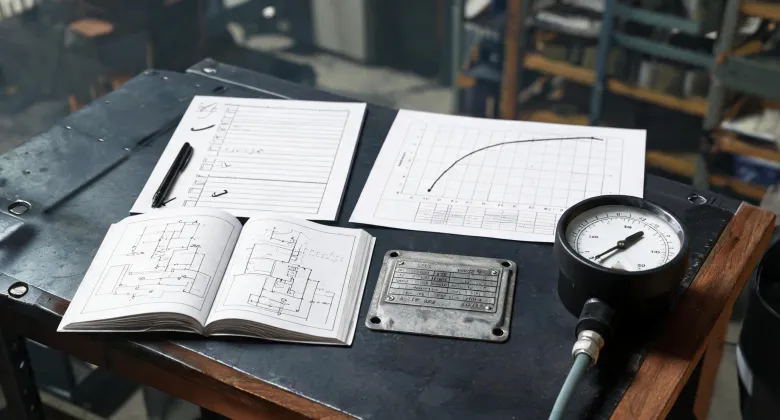
Grundfos does one thing better than most pump makers: public documentation. If you know the part number, you can typically pull a dimensional drawing, a performance curve, and a wiring diagram straight from the product center. That's a real advantage — no gatekeeping, no "contact your distributor."
But here's the trap I fell into.
Grundfos water pump diagrams change by revision. A drawing you downloaded in 2021 might show an older motor bracket than the pump shipping in 2025. On a CR-series replacement order, the buyer built their piping tolerance off a publicly available diagram. The bracket design had been revised — I want to say in 2019 — and the new version shifted the flange position by roughly 22 mm. We didn't catch it until the pump was on site.
Result: three days of re-machining, an irritated site manager, and one very awkward call.
Private label does the opposite. You usually get a one-page spec sheet, sometimes a photo, sometimes nothing. That sounds worse — and honestly, it is, if you need dimensional integration — but it sets a lower expectation. Nobody builds a CAD model from a private-label spec sheet. Everybody builds a CAD model from a branded PDF. That's where the mistakes hide.
The counterintuitive part: more documentation isn't automatically safer. It just hands you more ways to be confident and wrong at the same time.
Dimension 2: Cost Structure (Where the Math Gets Messy)
This is where private label looks like a no-brainer at first glance. It usually isn't.
On bulk air filters, the per-unit gap between an OEM-branded filter and a private-label equivalent typically runs somewhere between 15% and 35%, depending on media grade and annual volume. On starters, wholesale cost is all over the map — I was seeing quotes in the $48 to $140 range for the same spec back in early 2025. That spread is not a quality index. It reflects volume, warranty policy, and whether the seller is a manufacturer or a trader.
But unit cost is the wrong metric. Here's what the failure log actually tracks:
- Tooling or setup fees — usually rolled into a "one-time" private-label charge
- Testing and certification — often on the buyer if the private label crosses a regulated line
- Inventory risk — MOQs on private label are often 3–10x brand-order quantities
- Reverse logistics — the cost of getting a bad batch back and fresh stock in front of the customer
Quick example. June 2023, we had about two hours to decide on a private-label filter program — the procurement manager was done waiting and the deadline kept moving. Normally I'd run samples through a bench test first. There was no time. We went with the lower unit price. The first shipment landed with an approximately 6% leak rate at the end-cap seal. Not catastrophic. But irritating to everyone downstream. $6,200 order, roughly $800 in returns and credit memos.
In hindsight, I should have pushed back harder on the timeline. With the constraint I had, I made a call on incomplete information. That's what everyone does when the deadline dictates the analysis.
Bottom line: private label usually wins on unit cost, and usually loses on total landed cost until you're shipping serious volume.
Dimension 3: Compliance, Warranty, and Legal Risk
Two things matter here, and most buyers only ask about one of them.
The first is advertising. If you're labeling something "Grundfos compatible" or "OEM-equivalent," that claim needs to be substantiated. Per FTC advertising guidance (ftc.gov), claims must be truthful, not misleading, and backed by evidence. I've watched smaller resellers get genuinely surprised by this — they assume FTC rules are for consumer products, not industrial parts. They're not.
The second is energy and safety compliance. In the US, the DOE maintains energy conservation standards for certain pump types under 10 CFR Part 431. Private-label importers can inadvertently end up responsible for test documentation the original manufacturer already has on file. That gets expensive fast.
Brand pumps typically come with compliance paperwork ready to attach to a quote. Private-label paperwork is highly variable. In one 2024 project, we received a "CE declaration" that was a signed Word document with no testing reference attached. That was a red flag I've since added to the checklist.
Warranty process is the third leg. Brand warranty goes back to the manufacturer. Private-label warranty goes back to the supplier, who goes back to their factory, who goes back to... someone. In our records, average warranty resolution on brand pumps runs about 8 days. On private label, it runs about 21 days. Neither number is catastrophic. But for a customer with downtime on the line, 21 days is a deal-breaker.
Dimension 4: Lead Time, MOQ, and Inventory Risk
Brand pumps are predictable but slow. I've seen Grundfos lead times run anywhere from a few weeks to a few months depending on the model family and configuration. Standard sizes tend to be warehouse-available through distributors. Non-standard hydraulic ends, special seals, or custom motor voltages can take considerably longer — and if you're standing in front of a client with a 90-day project window, that matters.
Private label inverts that. MOQs are harsh — 5,000-piece minimums on filters and 500-piece minimums on starters are common — but once the first order is placed, replenishment is steady and pricing stays flat. You're trading working capital for cost stability.
Inventory risk sits entirely with the buyer on private label. That unsold filter SKU isn't just sitting on a shelf — it's your cash sitting on a shelf. On brand parts, you can usually place small orders as needed and let the distributor hold stock.
So the question becomes: how much cash are you actually willing to lock into a shelf?
So Which One Should You Actually Pick?
Here's how I steer it now, and it depends entirely on the scenario:
- Pick brand/OEM when the part is mission-critical, when downtime is measured in dollars per minute, when you need dimensional integration off a specific drawing revision, or when warranty resolution speed matters to your end customer.
- Pick private label when the part is consumable, the spec is forgiving, the annual volume supports the MOQ, and you have warehouse capacity to absorb 6–12 months of stock. Bulk air filters and high-turnover starters usually fall into this bucket.
- Pick compatible aftermarket only when you've independently verified the spec — not just the part-number match. Part-number match without spec verification is how people end up with 22 mm of misplaced pipe.
One note on timing: this was accurate as of April 2026. Tariffs, DOE rulemaking, and supply-chain lead times all move faster than they used to. Verify current rates and compliance requirements before you lock a purchase order.
I still keep the failure log. Twelve thousand dollars isn't a huge number in industrial procurement terms, but every dollar of it came from something I could have caught with a checklist and 20 extra minutes. That's the whole point of comparing things side by side before you commit — 5 minutes of verification beats 5 days of correction. Usually.

Elaine Zhou
Elaine Zhou is a cable-management and connectivity analyst specializing in cable trays, cable glands, ties, conductors, terminations, plugs, sockets, and outlet connections. She applies IEC 61537 tray tests, IEC 62444 gland requirements, and IEC 60364-5-52 wiring criteria while examining safe current capacity, voltage drop, bend radius, segregation, grounding, sealing range, and enclosure entry. She helps contractors and engineers choose coordinated routes and connections for environmental exposure, expansion capacity, installation labor, reliability, and maintenance access.