How to Buy Grundfos Water Pumps Without Wasting Weeks: A Procurement Admin's Notes
2026-09-30 · Marta Kowalska
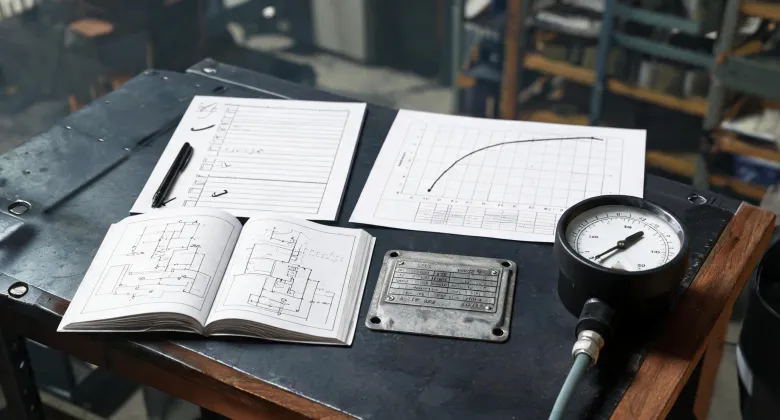
If you're buying a Grundfos water pump or industrial pump parts, the single highest-leverage thing you can do is send your supplier the full nameplate spec — model, flow rate, head, voltage, phase, frequency, and efficiency class — not a diagram, not a shelf photo, not "the one that looks like this."
That's the answer. Everything below is why I believe it, and where it breaks down.
In 2022, a partial spec cost us $840 in returns, freight, and a stalled repair. Four pages of nameplate data now prevent that from happening again. I'll take that trade every time.
Why you should trust this
I'm the office administrator for a 140-person equipment services company in Ohio. I took over purchasing in 2021. That means roughly $220,000 a year moving through 9 vendors — industrial pumps, motors, filters, and the small parts that keep jobs from going sideways. I report to operations and finance, which is a polite way of saying I get blamed from both directions.
I'm not an engineer. I'm the person who has to get the right part to the right tech on the right day, with an invoice that clears accounting. That's the lens I'm writing from.
The "Grundfos Water Pump Diagram" Everyone Googles (And What Actually Helps)
When someone on my team searches for a Grundfos water pump diagram, they're usually trying to match a physical pump to a part number. Fair instinct. Wrong tool.
Manufacturer diagrams tell you how a pump is built. They don't tell you which variant you're holding. Grundfos makes hundreds of pump configurations across their circulator, submersible, centrifugal, and dosing lines — and two pumps that look identical from the outside can differ by seal material, impeller trim, and voltage. I've watched a tech pull a pump off a shelf convinced it was the right one, based entirely on a diagram match, and it wasn't.
What actually works:
- Photograph the nameplate, not the pump. Crop tight. Get every character.
- Write down the flow and head numbers from the curve you're trying to hit, not just the model.
- Note the installation environment — indoor/outdoor, ambient temp, wet/dry, hazardous area or not.
- Ask whether the duty point is fixed or variable. Variable-duty applications often need a different control setup.
The diagram gives you confidence. The nameplate gives you the right pump. Those aren't the same thing, and the gap between them is where money disappears.
The Most Expensive Mistake Isn't the Price
Most buyers focus on unit price and completely miss the total cost of getting the wrong unit installed.
Here's the math from our own books. A mid-range industrial pump might run $1,800-3,500 depending on size and configuration. Returning one costs us:
- Freight back: $120-260
- Restocking fee: often 15-25% of unit price
- Replacement freight: $120-260
- Downtime on the repair job: variable, but always worse than the parts cost
So a "cheaper" pump that's wrong costs more than a more expensive pump that's right. That's not a clever insight. It's just what the invoices say.
People think a more expensive pump is better. The reality is a bit different: pumps that perform well — lower energy draw, fewer seal failures, longer service intervals — justify a higher price. The quality comes first, the price follows. Buyers who treat price as a proxy for quality get it backwards more often than they'd admit.
Small Orders Get Treated Seriously (Or Should)
I want to say something about minimum order quantities, because it comes up in every negotiation I've had with an industrial pump wholesale supplier.
I've had vendors quote me a 25-unit minimum on a pump we needed exactly one of. I've also had a distributor in Cleveland take a $340 order from us in 2021, walk me through the install on the phone for 20 minutes, and never once make me feel like the order was too small to matter.
That distributor is now on our short list for a $45,000 annual rotation.
Small doesn't mean unimportant. Small means early. A trial order is a test — from the buyer's side, you're testing whether the supplier can ship on time, invoice correctly, and answer a question without transferring you four times. If they pass, you scale. If they don't, you saved yourself a five-figure mistake.
That said — I'm not going to pretend the economics are the same. They aren't. A single-unit order at three in the morning is genuinely more expensive for a supplier to fulfill than a pallet order shipped on a scheduled truck. My ask isn't for pricing parity. It's for basic courtesy and honest communication. Tell me the minimum, tell me why, and tell me what a reasonable first order would look like. That's it.
The Compliance Documents Nobody Mentions Until Shipping
This one cost me a week in 2023.
We ordered a pump for a job that turned out to be in a classified hazardous area — Zone 2, if you want the detail. I didn't know that when I placed the order. The supplier didn't ask. When the pump arrived, the electrician took one look at the nameplate and refused to touch it.
They warned me, in a way. Our lead electrician had asked if the area was rated. I didn't understand what he was asking. That's on me.
What I now ask on every pump order:
- What's the applicable enclosure or protection rating? (IP rating for general use, ATEX/IECEx if there's any chance of a hazardous location.)
- Does this pump meet the efficiency class required for the region? IEC 60034-30-1 defines IE2, IE3, and IE4 for motors, and some jurisdictions require a minimum class on new installs.
- Is there a declaration of conformity, and who signs it?
- What's the warranty term, and what voids it?
None of this is exciting. All of it is the difference between a job that finishes on time and a job where you're explaining to a VP why a $2,200 pump is sitting in a warehouse.
When Buying Straight Isn't the Right Call
Buying through a distributor isn't always the best move. Here's when I do something different:
- Custom or legacy configurations. If the pump's been discontinued or modified, a specialist rebuilder or the OEM directly often beats a generic wholesaler.
- Emergency same-day needs. A local supply house with stock on the shelf is worth the premium when a job is down. The premium is almost always smaller than the downtime.
- Regulatory ambiguity. If you're not sure whether the application is hazardous-rated, ask an engineer before you order. It costs 20 minutes. It saves a week.
- Anything under $200. Shipping and handling often eat the savings. Local pickup is sometimes just better.
One more thing. If you're a small shop placing your first order with a supplier — ask for a sample or trial quantity. Any industrial pump wholesale operation worth using will find a way to make a modest first order work. If they won't, that's information too.
The nameplate, the compliance paperwork, and honest communication about order size — that's the whole guide. Everything else is logistics.

Marta Kowalska
Marta Kowalska is an electrical equipment procurement and quality analyst covering distribution gear, automation, generators, pumps, test instruments, and engineered assemblies. She reviews IEC 61439 routine-verification records for assembly current and temperature rise, IEC 60034-1 rating and test data for rotating machines, and ISO/IEC 17025 laboratory scopes for reported calibration uncertainty. She helps buyers compare inspection status, document traceability, total installed cost, lead time, service access, spare-parts support, warranty boundaries, and failure consequences across equipment categories.