How to Evaluate Starter Manufacturers: A Grundfos Water Pump Comparison
2026-09-04 · Rebecca Sloan
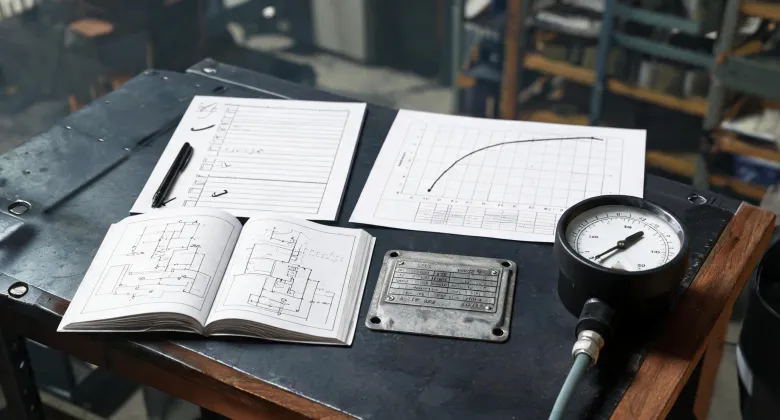
I've managed purchasing for a 170-person manufacturing facility since 2020. In a normal year, I process 60-80 orders for pumps, starters, and electrical spares, which adds up to roughly $350,000 in spend across eight active suppliers. I report to operations and finance. That's a polite way of saying I'm the person who hears about it when a part arrives late and when an invoice doesn't match its purchase order.
This article is a comparison I've wanted to write for a while. It compares two ways of ordering the same kind of component. Option A is buying a known product, like a Grundfos water pump, through a specialist supplier that can stand behind it with documentation and support. Option B is ordering an equivalent product from whichever pump manufacturer, starter manufacturer, or fuel pump manufacturer quotes the lowest number.
Quick disclosure: I'm not an engineer, so I won't pretend to compare hydraulic curves, winding classes, or impeller alloys. What I can tell you from a purchasing perspective is what happens after the purchase order goes out: what the part really costs to install, whether the drawings match, and whether the supplier's process makes my job easier or harder. Those criteria determine where my money actually goes.
The comparison I run before every big order
The framework is simple. Column A is an established brand bought through a supplier I've used for years. Column B is the lowest quote from a manufacturer I don't know, discovered through a search engine or an online marketplace. I used to think the difference between the columns was quality. After five years of this work, I think the difference is mostly cost, documentation, and follow-through.
First, compare real costs, not quote price
Let's take an example. In March 2026 I needed a replacement pump for our hot water system. My regular supplier quoted a Grundfos water pump at about 22 percent above the cheapest comparable unit from a manufacturer I'd never used. If I only looked at the first line of each quote, the decision was done.
But the cheapest quote wasn't complete. Freight was extra. The installation drawing and documentation that should have been part of the sale had a separate fee. The minimum order was higher than the quantity we needed. Return terms included restocking. Lead time was 41 days versus 18 days. None of those costs showed up in the initial comparison.
I'm not saying the cheaper pump would have failed. I'm saying the 22 percent saving was probably much smaller by the time the part was installed, and if anything went wrong, the cost of chasing it would have been real. Total cost of ownership is a buzzword for a reason:
TCO = quoted price + freight + documentation fees + installation time + the hours your staff spend resolving problems + the expected cost of downtime.
The same test applies when I evaluate starter manufacturers. A starter manufacturer can quote a very low price and still add cost in shipping, paperwork, or troubleshooting time. I now ask every supplier for a delivered-installed number, not just a product number and a price.
Second, ask about diagrams before you ask about discounts
This is the dimension that changed my mind. In 2020, I would have filed diagrams under 'paperwork' and let the engineers handle it. Now I see a diagram as part of the product. It's an installation map, a safety check, and a time-saver.
In 2024, one of our circulation pumps started losing pressure. The maintenance supervisor and I sat down to find a replacement. I typed grundfos water pump diagram into the search field of the manufacturer's public database, the Grundfos Product Center. Within a few minutes, we knew the flange size, connection style, and dimensions of the pump we needed. That diagram probably saved us an afternoon of measuring and an expensive wrong order.
Cheaper manufacturers often struggle with this exact point. The starter manufacturer that nearly won an order from us in 2025 sent a wiring diagram for a different revision of the same model. The model number was right; the drawing wasn't. Our electrician caught the mismatch before anything was connected, but the time he spent checking would have wiped out most of the price advantage. I'm not 100% sure the starter itself was worse than our usual brand. I am sure the documentation was worse.
I use the same standard for a fuel pump manufacturer. If the manufacturer cannot supply a model-specific drawing that matches the unit on the shelf, I treat the product as unfinished. This sounds strict, but it has saved us from at least two bad purchases.
Third, compare friction and paperwork
Compliance is not glamorous, but it's the reason I have this job. We didn't have a formal vendor-approval process when I took over purchasing in 2020. It cost us $2,400 when a supplier delivered exactly what we ordered but couldn't produce an invoice that satisfied finance. The expense was rejected, and I had a short, unpleasant conversation with my VP. The lesson was simple: a product isn't purchased until the paperwork is accepted.
Established suppliers tend to be boringly good at this. Purchase orders, invoices, delivery notes, and serial numbers all line up. When an auditor asks where a pump came from, I can answer in minutes. That is a cost advantage even if it never appears on a price list.
In the 2024 vendor consolidation, we cut our supplier list from 14 to eight. One side effect was that accounting stopped chasing order histories across different systems; it saved roughly six hours a month. That was the moment I started measuring friction as a line item.
Which option should a buyer pick?
If you ask me which column wins, my honest answer is: it depends on where the component sits. I buy a Grundfos pump when I need certainty, speed, and a clean paper trail. I buy from a cheaper manufacturer when I can absorb risk and handle the extra verification myself.
When the cheaper manufacturer can win
A lower-cost pump or starter manufacturer wins the order when the product is a spare, the maintenance team has time to inspect it, internal engineering can verify dimensions before installation, and a failure doesn't stop production. In that situation, paying a brand premium to reduce risk is like buying insurance you don't need.
When I stick with an established product such as a Grundfos pump
An established brand wins when the pump is critical, the layout is tight, finance and auditors expect traceability, and the cost of downtime is high. If the plant is running 24/7, a mistake costs real revenue. In that context, the supplier's documentation and process are not extras; they're the product.
How to evaluate starter manufacturers: my checklist
If you want a practical answer to how to evaluate starter manufacturers, this is the checklist I use. It works for fuel pump manufacturers and water pump suppliers too.
- Ask for a complete delivered quote, including freight, minimum order quantities, documentation fees, taxes, and return terms. If the supplier only gives a unit price, you only have part of the cost.
- Request a model-specific diagram or datasheet, not a general brochure. Confirm the drawing matches the exact revision being shipped.
- Ask for a sample invoice or proof of compliant billing. It sounds odd, but it's faster than discovering an invoicing problem after the order.
- Clarify the warranty path. Ask who handles claims, what evidence they need, and how long replacement normally takes.
- Add a risk number to the comparison. Estimate the labor and lost production if the component failed in service, then add that to the price of any unfamiliar manufacturer.
Prices and lead times here reflect quotes I pulled in late March 2026 and a few notes from April 2026. Markets change, so verify current data before budgeting.
After five years, my conclusion is not 'always pay more.' It's 'always compare more.' A cheap component from a manufacturer that provides clean documentation and a compliant invoice can be the smartest purchase of the year. An established brand bought through a chaotic supplier can be the worst. If I evaluate starter manufacturers the same way I evaluate a Grundfos water pump, I make fewer mistakes. The winning option usually reveals itself.

Rebecca Sloan
Rebecca Sloan is a power distribution and protection analyst specializing in circuit breakers, switchgear, contactors, fuses, surge protective devices, and coordination. She applies IEC 60947-2 breaker requirements, IEC 60269 fuse characteristics, and IEC 61643-11 tests while examining rated voltage, breaking capacity, time-current curves, selectivity, and prospective short-circuit current. She helps engineers and buyers compare protective devices against documented fault levels, installation conditions, maintenance access, and continuity priorities.