How to Spec a Grundfos Water Pump When You're the One Watching the Budget
2026-08-20 · Rebecca Sloan
-
There is no 'best' Grundfos water pump—only the right one for your situation
-
Scenario 1: You're a pump OEM. Consistency beats every other factor
-
Scenario 2: You're replacing an existing pump. Find the nameplate before you do anything
-
Scenario 3: New installation. Give the engineers the truth, including the price
-
How to know which scenario you're in, and what to do about it
There is no 'best' Grundfos water pump—only the right one for your situation
I've been the procurement manager at a 60-person industrial equipment supplier for six years. We sell Grundfos pumps, and we also use them in some of the OEM equipment we build. That puts me in a strange position: I watch the budget on both sides—buying pumps for production and handling replacement and wholesale orders for customers. I don't design pump systems. But I've managed roughly $240,000 a year in pumping-related purchases, and I've learned that choosing a Grundfos pump is rarely about finding 'the best one.' It's about matching the pump to the situation.
If you're looking at a Grundfos water pump and hoping for a simple answer, I have bad news: it depends. That doesn't mean you're stuck. It means you need to be honest about which scenario you're in. In my experience, most pump purchases fall into one of three buckets.
- You're a pump OEM—building Grundfos pumps into equipment you sell.
- You're replacing a pump in a plant that's already running.
- You're buying for a new installation—a building, expansion, or brand-new system.
Each scenario has a different cost logic. Let's go through them.
Scenario 1: You're a pump OEM. Consistency beats every other factor
If you're a pump OEM—buying Grundfos pumps as components to integrate into equipment you sell—price isn't your first problem. Reliability and repeatability are. That sounds like a procurement cliché, but it's true. If you change pump models, you have to redo documentation, re-test the assembled unit, update internal part numbers, tell customers the spec changed. That is a real cost. It's not on the purchase order, but it's there.
For OEM pump buyers, I look for a few things:
- Long-term availability of the same Grundfos model and configuration.
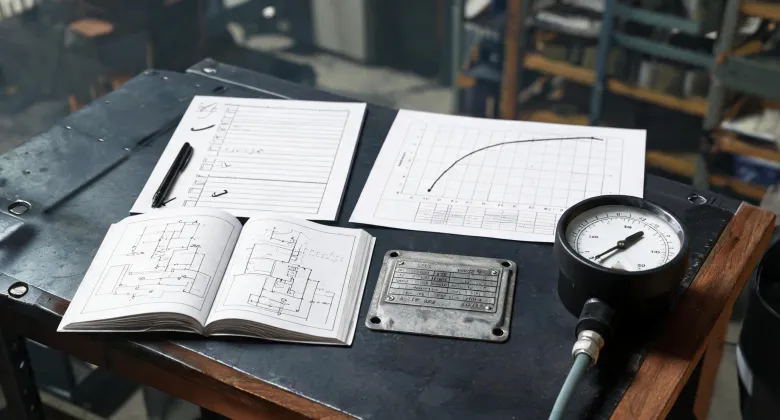
- Complete technical documentation, including dimensional drawings, performance curves, and the Grundfos water pump diagram that shows every component.
- Consistent quality from production batch to production batch.
- Predictable lead times, not just fast lead times. Predictability matters more than speed.
What about compliance? This is where the diagram is more than a useful picture. If you're selling an integrated product, you need to know exactly what's in your pump package. The motor starter is an area where I've seen confusion. A pump can be perfectly compliant on its own, but when you attach a starter that isn't listed for the combination, the finished product may not be compliant.
I'm not a compliance engineer, so I can't tell you which standard applies to your specific machine. What I can tell you from a procurement perspective is: ask for documentation early. I remember sitting in a meeting where someone said the pump was CE marked. Then the engineer on the other side said the assembled unit needed its own CE mark. They worked it out. But if procurement had picked a random starter from a different supplier just to save $160, that meeting would have been a lot longer.
If this is your scenario, get the pump diagram, get the submittal sheet, and get the wiring diagram. You'll need them for your compliance file.
Scenario 2: You're replacing an existing pump. Find the nameplate before you do anything
This is the scenario I see most often, and it's the one where mistakes are the easiest to make. A pump fails. Someone says 'I think it's a Grundfos CR10.' They order a CR10. It arrives and doesn't fit. That's how you turn a $650 pump into a $1,200 headache.
The first thing you do with any Grundfos pump replacement is find the nameplate. I don't care if it's dirty. Wipe it off. What matters is the product number, the serial number, and the rated flow and head. The model name alone is usually not enough. There are multiple versions of the same pump concept, and Grundfos's product numbering can be very specific.
After you have the nameplate numbers, pull up the Grundfos water pump diagram for that exact model. It does two things: it shows which components are included in a full replacement, and it helps you decide whether repair is less expensive than replacement.
This is where I get to my favorite part: doing the math.
Last year, we had a small Grundfos circulation pump that was leaking. The repair kit was about $90—shaft seal, O-rings, gaskets. Our maintenance person needed 20 minutes to install it. Labor cost roughly $40 with overhead. A new pump was $390. That was an obvious repair.
Six months earlier, a larger CR pump went down. The repair kit was quoted at $620. That's not bad on its own. But after labor, replacement bearings, and an expedited shipping fee for the seal, the repair was going to come to about $2,150. A new Grundfos pump with warranty was $4,800. Wait—so repair is still cheaper. So why did we buy new? Because the old pump had already been repaired once. The reliability risk, plus the cost of downtime if it failed again, justified the new pump. I'm not saying that's the rule for everyone. I'm saying the difference between 'repair the old' and 'buy new' isn't a single price comparison. It's a calculation about what downtime costs you.
For replacement buying, industrial pump wholesale pricing might matter if you manage multiple sites or multiple pumps. I've seen discounts in the range of 15–25 percent when you buy several identical pumps at once, but don't hold me to that. It depends on the distributor, the model, and current inventory. The point is: if you're buying one pump, you can't always get wholesale terms. If you're buying six, you'd be silly not to ask.
One more thing about replacement: check the starter before you order. If you're replacing the pump but keeping the old motor starter, is that allowed? Usually yes, if the motor characteristics match. But if you're replacing the motor too, the starter compliance requirements change. I've seen a company order a high-efficiency motor, keep the old starter, and wonder why it tripped at startup. High-efficiency motors can have different locked-rotor current. The starter might be undersized. This isn't my area of expertise, but I know enough to tell you to ask someone who knows. It can be an invisible cost that shows up after installation.
Scenario 3: New installation. Give the engineers the truth, including the price
New installations are the most fun because you're not fixing a problem. You're building something. But they're also where budgets get blown. In my experience, the biggest hidden cost isn't the pump itself. It's the underestimation of everything that goes with the pump: piping connections, valves, controls, starters, vibration isolators, a concrete baseplate. The pump diagram helps identify what's included in the pump package—and what isn't.
When we quote a Grundfos pump for a new installation, I try to get a full package quote, not just a pump price. If a supplier says 'the Grundfos CR10-3 is $3,200,' the first question out of my mouth is: does that include a motor? Does it include a starter? Does it include the seal? The answers change the number quickly.
For new installations, starter compliance is not a detail. It's a requirement. If you're in North America, the National Electrical Code (NEC) requires motor circuits to have a disconnecting means, branch-circuit short-circuit protection, and overload protection sized for the motor. The starter is part of that circuit. It's not optional. If you're outside the U.S., the relevant local code will be different, but the principle is the same. You're not just buying a pump; you're buying a compliant motor circuit. If you're asking about starter compliance requirements, you're already ahead of many buyers.
I should add that if the pump system involves a variable frequency drive, the compliance picture gets more complex. VFDs introduce harmonic distortion, reflected wave voltages, and extra grounding requirements. That's not something I can give you a rule for. But it's a good example of why a pump diagram, a motor nameplate, and a wiring diagram are all necessary documents for the people doing the install.
In Q2 2024, I priced a small Grundfos pump package for a greenhouse expansion. The pump itself was $1,150. By the time we added a NEMA-rated starter, a disconnect switch, and proper wiring components, the electrical sub-package was $640. No single item was outrageous. But if someone had promised the client 'a $1,150 Grundfos pump and that's it,' the client would have been furious. That's the hidden cost I'm talking about.
How to know which scenario you're in, and what to do about it
Not sure which bucket you're in? Ask yourself three questions.
- Is this pump going into a product that you sell to someone else? If yes, OEM rules apply. Documentation and repeatability dominate.
- Is there an existing pump with a nameplate on it? If yes, you're in replacement mode. Get the exact product number and serial number first, then do the math on repair vs new.
- Are you building a new system from scratch? Then you need a full pump package. Ask for a complete bill of materials, including starter, controls, and installation accessories.
That probably sounds simple. The hard part is being honest with yourself when the answer isn't what you expected. I've had to go back to our own team and say, 'We bought the cheaper pump, but this is an OEM application, so the inconsistency will cost us more later.' That's a painful sentence to say. But it's better than the alternative.
One more thing I've learned: the size of your order shouldn't determine how seriously a supplier treats you. When I was earlier in my career, a vendor treated my $200 order like it was unimportant. I remembered it. A few years later, when I had a much larger order to place, that vendor didn't get the quote. Small doesn't mean unimportant. It means potential. And a good pump supplier understands that.
Grundfos makes solid water pumps. I can't speak to every model or every application, and I'm not an engineer. But from a procurement perspective, the pump is only the beginning. The diagram is your map, the nameplate is your clue, and the starter is the thing you should not forget.
If you're a pump OEM, buy for consistency, not just price. If you're replacing a pump, buy with facts, not guesses. If you're building something new, buy a package, not just a pump. That's not the kind of advice you get from a single 'best pump' blog post. It's the kind of advice you get from six years of watching orders go right—and wrong.

Rebecca Sloan
Rebecca Sloan is a power distribution and protection analyst specializing in circuit breakers, switchgear, contactors, fuses, surge protective devices, and coordination. She applies IEC 60947-2 breaker requirements, IEC 60269 fuse characteristics, and IEC 61643-11 tests while examining rated voltage, breaking capacity, time-current curves, selectivity, and prospective short-circuit current. She helps engineers and buyers compare protective devices against documented fault levels, installation conditions, maintenance access, and continuity priorities.