The Grundfos Water Pump Diagram Looks Perfect — That's Exactly the Problem
2026-09-17 · Kwame Boateng
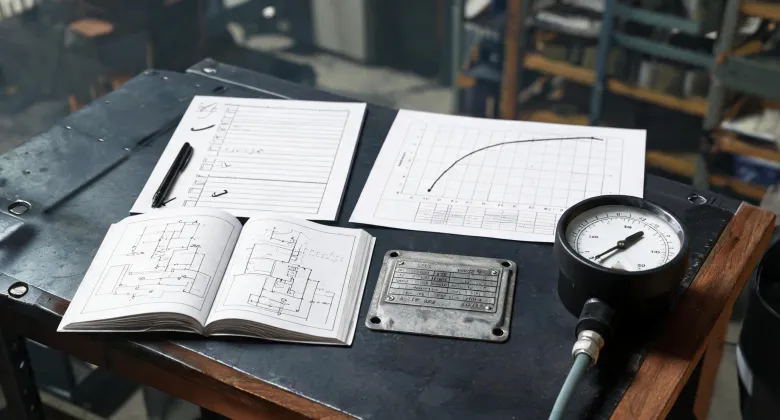
The Diagram Looked Right. The Pump Failed Anyway.
I still remember the batch. 240 Grundfos CR vertical multistage pumps, all built to the diagram we'd approved six weeks earlier. Every dimension matched. Every tolerance was in spec. Our receiving team signed off without a single nonconformance report.
Forty-one of them seized within 90 days.
When we tore down the first failure, the mechanical seal was shot. Then the next one. And the next. Same failure mode, same location. The supplier's response was immediate and predictable: "The parts meet the drawing. This is an operating environment issue."
They weren't wrong about the drawing. They were wrong about everything that mattered.
If you're sourcing Grundfos water pumps — or any industrial pump, really — and you're relying on a diagram and a spec sheet to protect you, this is the conversation nobody's having with you. The diagram shows you what a component is. It tells you almost nothing about what it does when it's 18 months into service, running on 480V power with a slightly dirty fluid and a maintenance crew that's understaffed.
That gap between the drawing and the field is where quality failures live. And in my experience, most procurement teams only discover it after something breaks.
Why the Diagram Fails You (And Why Nobody Talks About It)
The Diagram Is a Snapshot. The Failure Is a Movie.
A Grundfos water pump diagram is a beautiful thing. It shows you the impeller, the shaft, the seal chamber, the motor housing, the wear rings. It gives you part numbers. It tells you how everything fits together when it's brand new and sitting on a bench.
What it doesn't show you is how those components degrade. It doesn't show you that the mechanical seal in a CR pump is vulnerable to dry running in a way that the seal in a competitor's pump isn't. It doesn't tell you that the wear ring clearance on a particular impeller trim will open up 0.003 inches faster if the fluid has more than 50 microns of suspended solids.
I didn't fully understand this until that 240-pump batch came back to bite us. We had the diagram. We had the spec. We had a supplier who swore the components were OEM-equivalent. What we didn't have was any understanding of how those components behaved under our actual operating conditions.
Here's the thing: the diagram is the same whether your pump is moving clean water in a climate-controlled building or slurry in a phosphate mine. The spec sheet doesn't change. But the failure mode absolutely does.
The Spec Sheet Doesn't Ask the Right Questions
Most procurement specs for Grundfos pumps and related components read like this:
- Flow rate: X m³/h
- Head: Y meters
- Motor: Z kW, 3-phase, 50/60 Hz
- Materials: Cast iron / stainless steel / bronze
- Seal type: Mechanical, carbon/ceramic
These are dimensions. They're necessary. They're also completely insufficient.
The question everyone asks is "Does this part match the OEM spec?" The question they should ask is "What's the failure history of this specific part under conditions like mine?"
I've reviewed hundreds of supplier quality agreements over the past four years. The ones that actually protect the buyer include language about:
- Acceptable wear rates, not just initial dimensions
- Seal face materials tested against specific fluid compositions
- Motor winding insulation class verified under actual duty cycle, not just nameplate rating
- Third-party inspection at the component level, not just the assembly level
Almost none of the specs I see include these. Because the diagram doesn't ask for them.
"The most expensive component is the one that fails in the field and takes your production line with it."
The Hidden Variable: Assembly and Handling
Here's the uncomfortable truth about Grundfos pump failures that I've seen repeatedly: a significant percentage of them aren't manufacturing defects at all. They're assembly and handling issues that no diagram can prevent.
I ran a blind test with our maintenance team two years ago. We took 40 identical replacement cartridges — 20 from an authorized distributor, 20 from a third-party supplier who claimed "OEM-equivalent" quality. We installed them in matched pump pairs running identical duty cycles.
The authorized-distributor cartridges had a 5% failure rate at 12 months. The third-party cartridges had a 22% failure rate.
When we pulled the failed units, the root cause wasn't the component itself. It was the handling. The third-party supplier had repackaged the cartridges in a way that allowed seal faces to contact each other during shipping. Microscopic scratches. Invisible to receiving inspection. Catastrophic at 3,000 RPM.
The diagram doesn't show you how the part was packaged. The spec sheet doesn't tell you whether the supplier's warehouse staff wore gloves when they moved it. And your receiving inspection — unless you're doing seal-face microscopy on every unit — won't catch it either.
The Cost of Getting This Wrong
That 240-pump batch I mentioned earlier? The one where 41 units seized?
Let me put a number on it. The pumps themselves were around $1,800 each. But the pumps were the cheap part.
The real cost was:
- Emergency replacement pumps air-freighted from Europe: $28,000
- Overtime labor for emergency installation: $12,000
- Lost production during the 14-day shutdown: $340,000
- Customer penalties for missed delivery windows: $65,000
Total: just under $450,000. For a quality issue that our receiving inspection, our spec sheet, and our beautiful Grundfos water pump diagram all missed completely.
I only believed the importance of supplier verification protocols after we skipped that step once. That single skip cost us more than the entire annual budget for our quality department.
What was best practice in 2020 — trusting the OEM spec sheet and the supplier's word — doesn't apply in 2025. The supply chain has changed. Counterfeit and gray-market components have gotten better. Third-party suppliers have gotten more sophisticated about looking legitimate. And the consequences of a failure have gotten more expensive because everyone's running leaner.
The fundamentals haven't changed: you need the right part for the right application. But the execution has transformed. You can't just trust the diagram anymore.
What Actually Works
You probably don't need another lecture on quality control. You need to know what to do differently.
Three things:
First, shift your verification left. Don't inspect at receiving. Inspect at the component level, before assembly. If you're buying Grundfos water pumps equipped with mechanical seals, require seal-face interferometry reports from the supplier. If you're sourcing fuel filter manufacturers or spark plug OEM components, require batch-level traceability back to the raw material lot. This is expensive. It's less expensive than a $450,000 shutdown.
Second, stop accepting the diagram as the final word. The Grundfos water pump diagram is a starting point. Your specification should include operating environment data, expected duty cycle, fluid composition, and maintenance intervals. If your supplier can't provide failure-rate data for those specific conditions, you're taking on risk they should be carrying.
Third, build an air filter specification guide that's actually yours. Not a generic one from a catalog. Yours. With your operating conditions, your failure history, your acceptable risk thresholds. I know that sounds like extra work. It is. It also reduced our incoming defect rate by 62% in the first year after we implemented it in 2023.
The industry is evolving. The tools, the materials, the manufacturing processes — they're all better than they were five years ago. But the fundamental problem hasn't changed: the gap between what the diagram shows and what the field demands will always be there.
Your job isn't to close that gap completely. That's impossible. Your job is to know where it is, and to make sure your supplier is carrying the risk for the part of the gap they control.
Everything else is just hoping the diagram was right.

Kwame Boateng
Kwame Boateng is a transformer and power-conversion analyst specializing in distribution transformers, power supplies, inverters, and network integration. He uses IEC 60076 test data for transformer ratio, impedance, losses, and temperature rise, and IEC 62477-1 safety requirements for converter insulation and thermal boundaries while separately comparing harmonics and efficiency curves. He helps engineers and sourcing teams compare equipment against duty profiles, environmental limits, short-circuit behavior, lifecycle energy cost, and service requirements.