A Grundfos Water Pump Just Failed? Start With the Diagram, Not the Quote
2026-09-08 · Rebecca Sloan
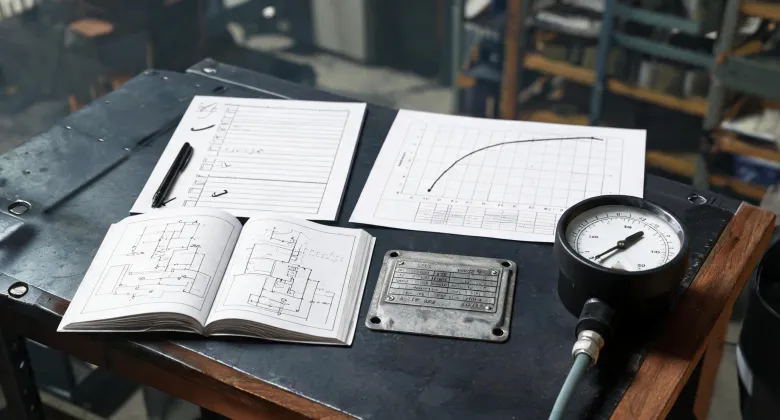
If your Grundfos water pump just failed and you're measuring the situation in hours, the most urgent thing you can do is not what most teams expect. It's not calling three suppliers for quotes. It's spending fifteen or twenty minutes on identification before you ask for anything.
A request for a “Grundfos water pump” without a type designation is not a request. It's a starting point for guesses. The most expensive part in any breakdown isn't the one with the highest price tag—it's the one that arrives on time and doesn't fit.
In my role coordinating rush orders at an electrical and industrial supply company, we processed 47 emergency orders last quarter and hit on-time delivery for roughly 95% of them. The handful that failed taught me more than all the smooth ones. Almost every failure was an identification failure, not a shipping failure. The pump sat on a dock somewhere, right on schedule, while the customer waited for a second order because the first one was wrong.
Step one: photograph the nameplate before you phone anyone
Before you open your email, walk to the pump and find the nameplate. If it's greasy, wipe it off and use the flashlight on your phone. The data tag is your fastest source of truth. Look for:
- Type designation and product number (P/N)—this unlocks everything else
- Rated flow (Q) and head (H), when shown
- Motor data: voltage, current, power in kW, and speed
- Serial number—especially important when the pump is older or has been serviced before
Photograph the tag straight on, then take one wider shot that shows the whole pump and its piping. Pay attention to suction and discharge orientation in that wider shot. I've lost count of how many pumps were ordered from memory instead of from the tag. Don't be that person.
Why the Grundfos water pump diagram is the real shortcut
There is a misconception that exploded diagrams are maintenance references only. They are not. A diagram is a purchasing tool. Search for a grundfos water pump diagram in your specific model, and you will usually find official product pages and exploded-view drawings. Those drawings show exactly what belongs inside that pump: impeller, wear rings, shaft sleeve, mechanical seal, and the complete service kit.
This is not paperwork for the sake of it. Two pumps can look identical from the outside and differ internally, particularly across production years. A seal for a 2018 unit may not be the correct seal for a visually identical 2021 unit. The diagram settles that question before money moves, not after.
If the nameplate is worn or missing, send the serial number plus clear photos of the pump's configuration and pipe connections to your supplier. Experienced parts people can often narrow it down. But don't ask them to guess blind.
A quote should be a price, not a puzzle
Once you know exactly which pump or kit you need, price comparison gets much simpler. That is where transparency matters most.
I've learned to ask “what's NOT included?” before I ask “what's the price?”. The first number on a quote is rarely the number you will pay. The difference usually hides in extras: freight class, after-hours dispatch, insurance, minimum order charges. They may not appear if the seller is focused on making the unit price look low.
The vendor who lists all fees upfront—even when the total looks higher—usually costs less in the end. And a small transparent fee should not scare you. As of January 2025, a USPS first-class stamp costs $0.73, according to usps.com. Nobody ever blew a pump budget on stamps. The budget-busters are surprise fees that show up after you've committed.
One more thing: treat “compatible with Grundfos” as an advertising claim, not an engineering fact. Per FTC business guidance on advertising (ftc.gov), claims need to be truthful and substantiated. If a supplier cannot provide the cross-reference, part number, or drawing behind that claim, they have not substantiated it. In an emergency, you don't need hope. You need a part you can trace.
The $180 seal that turned into a $2,600 motor repair
Let me make this concrete. In March 2024, a plant engineer called us after a Grundfos multistage pump had already failed twice. The first time, their purchasing department saved roughly $180 by ordering a “compatible” mechanical seal kit from an online seller instead of the genuine service kit. It looked right. It installed without problems. Eight weeks later, it began weeping during a night production run, and water reached the motor.
The motor repair came to something around $2,600—I don't remember the exact total, and that invoice went to their maintenance budget, not ours. The pump was down another day and a half while they waited for the genuine kit we sourced. The $180 they saved turned into thousands of dollars in repairs and downtime.
Even after we confirmed the genuine kit would arrive within 24 hours, I kept second-guessing. What if the motor damage was worse than the photos showed? What if the promised lead time slipped? I didn't relax until the engineer texted a photo of the pump back online.
I will be balanced here. Not every replacement part has to be original-brand. For noncritical duty such as irrigation or transfer pumping, where a leak means inconvenience rather than a production loss, a quality equivalent may be acceptable. But when failure is expensive, a bargain is not a bargain. A “will-fit” part bought in a hurry is a gamble, and an emergency is the worst time to gamble.
The same logic applies across the catalog
This discipline is not limited to Grundfos water pumps. When a customer asks me how to qualify a fuel pump supplier, my answer is always the same: watch how they handle identification. Do they ask for the OEM reference, the application, and the mounting details before quoting? Or do they quote from a price list with no documentation behind it?
A starter catalog without OEM cross-reference numbers forces you to guess. A spark plug wholesale cost guide is useless if the heat range and reach are wrong for the engine. Price is always the last thing you should compare, not the first.
When not to run an emergency at all
Rush is not a virtue on its own. If the pump is still running and the problem is a small leak or a noisy bearing, you have time. Use standard freight, get two or three quotes, and plan the repair. Paying for same-day dispatch when the pump is running fine is just giving money away.
If the pump is old or discontinued, a rush repair may not even be the right answer. Sometimes service parts are slower and more expensive than replacing the entire pump with a current model. The diagram helps you see that before you commit to a rebuild.
And be careful with magical promises. No honest supplier can guarantee instant stock for every Grundfos pump model. Some models are stocked regionally; others are built to order. A realistic lead time—even one you don't like—is more useful than a false promise that collapses later.
So when a Grundfos water pump fails on your watch, start with the tag, not the quote. Look up the diagram, confirm the part, and ask for total pricing with all fees included. A rush order should be about fast shipping. It should never be about guessing.

Rebecca Sloan
Rebecca Sloan is a power distribution and protection analyst specializing in circuit breakers, switchgear, contactors, fuses, surge protective devices, and coordination. She applies IEC 60947-2 breaker requirements, IEC 60269 fuse characteristics, and IEC 61643-11 tests while examining rated voltage, breaking capacity, time-current curves, selectivity, and prospective short-circuit current. She helps engineers and buyers compare protective devices against documented fault levels, installation conditions, maintenance access, and continuity priorities.