What to Look for in a Water Pump Supplier: Lessons From 200+ Rush Orders
2026-09-09 · Rebecca Sloan
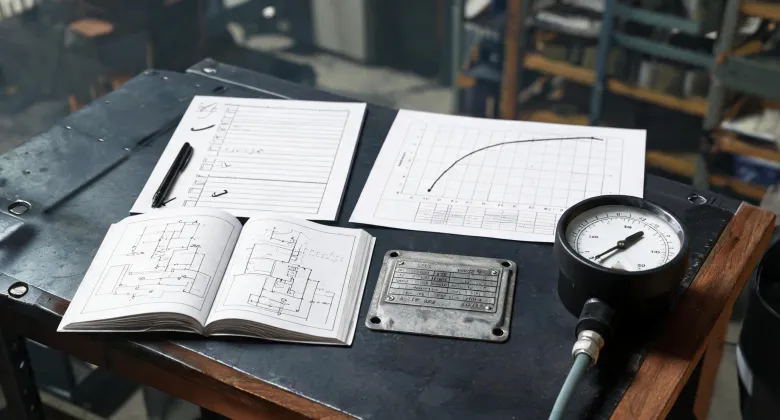
When a client asks me what to look for in a water pump supplier, I skip the brand portfolio speech and suggest one small test: ask the supplier to send the complete technical package for the exact Grundfos water pump on your shortlist, including the wiring diagram, dimensional drawing, and certified performance curve. Then start a timer.
A supplier that can send a verified Grundfos water pump diagram and a traceable spec sheet within a few working hours is a safer bet than a supplier with twice the inventory and no documentation discipline. Across 200+ rush jobs our team has handled, almost none failed because we couldn't find a pump. They failed because a spec mismatch slipped through: wrong motor speed, wrong flange rating, wrong control voltage. Those problems show up in documents long before they show up at the loading dock.
What Changed the Way I Vet Suppliers
In my first year in this industry, I made the classic rookie mistake: I trusted the word equivalent in a quote and skipped proper spec verification. The pump had the right brand family, but it was configured for a 60 Hz electrical supply. The client's plant runs on 50 Hz. That $800 rush shipment turned into a $600 rework and one very uncomfortable phone call.
Shortly after that, I compared two potential suppliers side by side. One had a bigger warehouse and a much longer price list. The other had leaner stock but a more controlled process. When I asked both for a complete wiring diagram and a certified performance curve, the first sent back a blurry page from a sales brochure. The second replied in under an hour with a clean PDF package, a duty point check against our required flow and pressure, motor data, and the exact Grundfos water pump diagram for that model.
Seeing those two responses side by side made me realize something that should have been obvious: inventory doesn't produce answers. People and data systems do. From then on, our supplier approval process shifted from can they get the pump? to can they prove what they're sending?
In March 2024, that discipline saved a client from a $50,000 penalty clause. A food processing plant contacted us with 36 hours to spare, needing a replacement Grundfos water pump before a planned restart. The model was available, but the real question was whether it would match the existing motor and control setup. We didn't accept an email that simply said it will work. We asked for the drawing and the performance curve, confirmed every line, paid for rush freight, and delivered with hours to spare. No magic. Just no guessing.
What I Actually Check Now
1. Documentation isn't a nice-to-have; it's the product. The pump's internal configuration is invisible once it's installed and piped. If a supplier won't commit to a specific model, a wiring diagram, and a performance curve in writing, they're asking you to approve a guess. I don't issue purchase orders without a full data package anymore. If a supplier can't produce a Grundfos water pump diagram under normal conditions, they definitely won't be better when the plant is down.
2. Compliance data needs to be current, not just present. The U.S. Department of Energy's pump efficiency rule for covered clean-water pumps is codified in 10 CFR Part 431, and its original compliance date was January 2020. In practice, this means efficiency and performance numbers should come from a documented test method, not a marketing story. Ask to see the pump's efficiency rating and production test data, ideally prepared in line with Hydraulic Institute or ISO 9906 test procedures. If a supplier can't produce that data, you have no way to know whether the quoted pump is current or simply old stock being cleared out.
Actually, the biggest shift I've seen over the past decade isn't in the pump hydraulics. It's in the amount of verification attached to each purchase. A decade ago the standard question was is it in stock? Now the question is is it compliant, and can you prove it? The fundamentals of pump selection haven't changed. The way we validate suppliers has.
3. The 4:55 PM test works. Send an urgent request late on a Friday and watch what comes back. A supplier with real technical staff responds quickly with clarifying questions: what's the nameplate duty point, what's the existing control setup, what's the hard deadline? A supplier with just a price list says no problem and asks nothing. The one who asks no questions is more dangerous than the one who admits they need to check something.
4. Demand stock honesty. Ask the supplier to state, in writing, whether the pump is physically in their warehouse or needs to be allocated from the factory. Vague promises are not lead times. We've watched too many 2024 orders where an ex-stock promise turned into a three-week wait because the seller was actually brokering someone else's inventory.
This applies beyond water pumps. When a client asks about fuel pump wholesale options, or starts stocking related parts like starters and filters, I give them the same checklist. Ask for rated flow, electrical specifications, and batch documentation before comparing prices. If a wholesale supplier offers an attractive price but no verifiable product data, the savings disappear at the first installation problem.
5. Never expected after-sale paperwork to be the differentiator, but it is. Commissioning engineers and plant auditors ask for efficiency data, wiring schematics, and traceability documents months after delivery. The supplier that keeps those records accessible saves you from expensive shutdowns when an inspector asks for proof. If a supplier goes silent after the invoice, that's not a cheaper pump. That's a deferred cost.
6. Check how the quote is structured. A serious B2B quote lists line items: pump, motor, coupling, mechanical seal, freight, and any optional extras, so you can compare apples to apples. A single lump-sum price can be honest too, but it's harder to verify. When I see line-item detail, I know the person quoting actually worked through the bill of materials. When I see a lump sum, I at least know which questions to ask before signing.
Where This Checklist Has Limits
I'll be honest about the limits, too. This framework isn't universal. If you're replacing an older pump one-for-one and the existing baseplate, pipe flanges, and motor starter were installed decades ago, exact dimensional compatibility can matter more than the latest efficiency rating. You need a supplier who can help you match the old footprint before you jump to a modern replacement.
If your project includes a custom skid, a control panel, or a full instrumentation loop, the supplier's engineering capability matters more than their email response speed. Documentation is still important, but it's not the whole story.
And if you need the manufacturer's official warranty, separately confirm whether the supplier is an authorized channel for that brand. A technically strong distributor is not automatically an authorized one. That distinction affects warranty coverage and after-sales support, and it's worth checking before you commit.
Most suppliers can find you a pump if you give them enough time. The ones worth a purchase order are the ones that can prove exactly what they're selling before you commit. That starts with a diagram and a data sheet. When the paperwork is right, the pump usually follows.

Rebecca Sloan
Rebecca Sloan is a power distribution and protection analyst specializing in circuit breakers, switchgear, contactors, fuses, surge protective devices, and coordination. She applies IEC 60947-2 breaker requirements, IEC 60269 fuse characteristics, and IEC 61643-11 tests while examining rated voltage, breaking capacity, time-current curves, selectivity, and prospective short-circuit current. She helps engineers and buyers compare protective devices against documented fault levels, installation conditions, maintenance access, and continuity priorities.