Grundfos Pump Suppliers vs. Broad-Range Wholesalers: What a $180K Sourcing Budget Taught Me
2026-09-15 · Rebecca Sloan
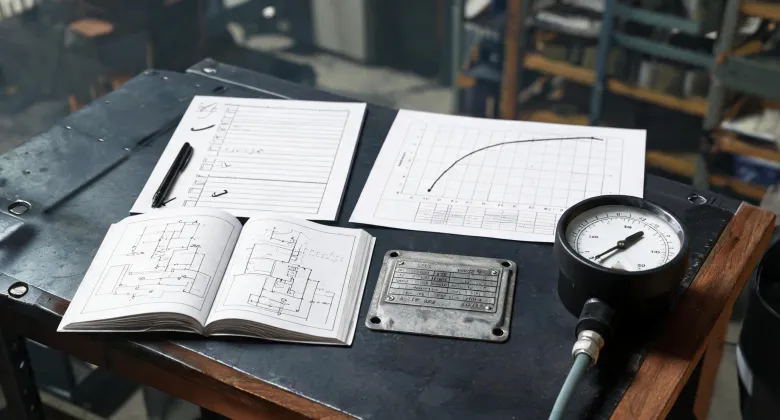
I run procurement for a mid-size facility and fleet maintenance operation. Our annual parts budget sits around $180,000, split across industrial water pumps, replacement filters, starters, and the usual auto-electrical consumables. Over six years I've placed more than 400 orders and negotiated with 30+ vendors.
The question I keep getting from counterparts at other companies: should we buy from authorized Grundfos distributors, or from a broad-range B2B wholesaler?
Both routes work. Both have failed on me at least once. So instead of handing you a "one is better" answer that'll fall apart in your situation, I'm going to compare them dimension by dimension—based on what actually showed up in our cost tracking system, not what the sales decks claim.
Here's the framework I'm using:
- Route A — Authorized Grundfos distributors / OEM channel: factory-backed, brand-focused, usually premium price.
- Route B — Broad-range B2B wholesalers: multi-brand catalogs, wider basket, competitive unit pricing.
Four dimensions, one verdict per dimension, then a scenario-based recommendation at the end. Let's go.
Dimension 1: Unit Price vs. Landed Cost
From the outside, vendor selection looks like a simple lowest-quote game. The reality is that the quoted number is maybe 60% of the story—and the other 40% is where budgets actually get destroyed.
In Q2 2024 I got two quotes to replace a failing Grundfos CR vertical multistage pump:
- Route A quoted $1,340 per unit. Freight included. Net-30 terms. Factory mounting kit included.
- Route B quoted $1,180 per unit. Plus $140 freight. Prepay only. Mounting kit sold separately at $95.
Route B looked $160 cheaper on the quote. Landed, it cost us $1,415—about 5.6% more than A. That's the kind of thing that doesn't show up until the invoice clears.
That said, I want to be fair here. For fuel filter wholesale orders in bulk, I've seen the dynamic flip. Route B routinely beats Route A by 18–25% on landed cost once you're buying in volume and can absorb a longer lead time. On a recent 500-unit filter order, that gap was worth about $2,800 annually in our fleet program.
Verdict on this dimension: Broad-range wholesalers usually win on unit price. They sometimes lose on landed cost. If you're not folding freight, payment terms, and kit completeness into the same spreadsheet, you're comparing the wrong numbers.
Dimension 2: Technical Documentation & Compliance
This is where the two routes diverge hard—and where I've seen more procurement teams get burned than anywhere else.
A few years ago, I made the classic rookie mistake: I assumed "Grundfos water pump" meant the same thing to every seller. Cost me a $600 redo when a replacement unit arrived with an unapproved impeller trim, and the pump curve didn't match what our system needed.
Here's what I've learned to check, every single time:
- Factory pump curve documentation—Route A ships it by default. Route B sometimes does, sometimes doesn't.
- Grundfos water pump diagram matching the specific model and revision. Diagrams drift between series; you want the one for your serial number.
- Starter specifications with the exact IEC 60034 rating data, not just a generic "12V starter" label.
- Compliance paperwork—for pumps, ISO 9906 performance-test grade claims; for filters, the OEM-equivalent bypass and micron rating.
The legacy myth that's still floating around: "Everyone who sells Grundfos gets the same documentation." That was truer 10 years ago when there were fewer resellers and most were regional. Today, the documentation quality depends entirely on the seller's relationship with the manufacturer and their own QA process.
Verdict on this dimension: Authorized distributors win by default because documentation is bundled. Broad-range wholesalers can match them, but only if you ask for the docs before you approve the PO. Put it in your vendor checklist. Make it a policy.
Dimension 3: Inventory Breadth & Lead Time
This is where the broad-range B2B wholesaler model actually shines—and it's the reason we keep both routes active.
Authorized Grundfos distributors are deep on Grundfos. They're shallow on everything else. If your order is "four Grundfos CR pumps and four dozen fuel filters," the authorized channel handles one line item well and refers you out for the rest. Each referral is a new PO, new freight, new lead time, new reconciliation.
Broad-range wholesalers like the one we use for our mixed catalog (pumps, filters, starters, spark plugs) consolidate that into a single shipment. On average, that saves us 4–6 days of administrative turnaround per mixed order—not because the parts arrive faster, but because we're not juggling three vendor agreements to make one maintenance event happen.
There's a catch, though. For a specific high-priority Grundfos model, the authorized distributor will have it on the shelf. The wholesaler usually won't. We didn't have a formal rush-partner agreement in place for the first two years. Cost us an 11-day downtime event when a critical pump failed and the wholesaler had to source it back through the manufacturer anyway.
Now we run a two-track policy: standard replenishment goes through the broad wholesaler, and any failure-risk SKU sits on a shortlist with an authorized distributor as backup.
Verdict on this dimension: Mixed-basket buyers should use a broad-range wholesaler. Single-failure-point buyers should keep an authorized channel warm. The two aren't competing—they're complementary.
Dimension 4: Warranty & Support Path
Nobody wants to talk about this dimension until a pump fails at 2 a.m. Then it becomes the only dimension.
When a Grundfos unit fails under warranty, Route A gives you a clean path: factory technician support, documented claim, replacement typically shipped within 10 business days. We've had two claims go through that channel in six years. Both resolved without drama.
Route B's path depends heavily on the seller. Some broad-range wholesalers are genuine distributors with real manufacturer relationships and can run a claim end-to-end. Others are essentially pass-through resellers—when something fails, you discover that "warranty" was a marketing term.
So glad I double-checked this before switching vendors in 2023. Was one signature away from moving our primary Grundfos SKUs to a wholesaler that turned out to have zero warranty authority with the manufacturer. That would've been a $4,200 pump out of pocket for the sake of saving $340 on the order.
Verdict on this dimension: For critical pumps, the authorized route is safer. For commodity parts (filters, plugs, starters), it barely matters—the failure cost is low enough that warranty is more logistics than risk.
What I'd Actually Recommend
Honest limitation upfront: there is no universal "best route." Any vendor pitch that claims otherwise is selling you something.
Here's how I'd decide if I were starting fresh:
- If you run a critical water treatment or process facility: Stick with authorized Grundfos distributors for the primary pumps. Eat the price premium. The downside risk on a failure is asymmetric.
- If you run fleet plus facility maintenance with mixed parts demand: A broad-range B2B wholesaler is usually the better backbone vendor. Layer an authorized channel on top for your failure-risk SKUs.
- If your orders are small and urgent: Broad-range wholesalers win on flexibility and small-MOQ policies almost every time.
- If your compliance requirements are strict (audits, traceability): Authorized channel unless the wholesaler can produce the full doc pack on request.
- If your budget answers to a board that reads item-level unit prices: Broad-range wholesalers, and be ready to defend the landed-cost math.
The mistake I see most often—and yes, I've made it—is treating these as competing options instead of a portfolio. Use each for what it's actually good at. The cost tracking system will tell you which is which inside a year.

Rebecca Sloan
Rebecca Sloan is a power distribution and protection analyst specializing in circuit breakers, switchgear, contactors, fuses, surge protective devices, and coordination. She applies IEC 60947-2 breaker requirements, IEC 60269 fuse characteristics, and IEC 61643-11 tests while examining rated voltage, breaking capacity, time-current curves, selectivity, and prospective short-circuit current. She helps engineers and buyers compare protective devices against documented fault levels, installation conditions, maintenance access, and continuity priorities.