Grundfos Water Pump Diagram: A 7-Step Checklist for Procurement Managers
2026-08-27 · Rebecca Sloan
-
1. Match the Diagram to the Nameplate
-
2. Read the Pump Curve, Not Just the Model Number
-
3. Verify Motor and Electrical Data
-
4. Check Ports, Flanges, and Threads
-
5. Confirm Seal and Material Compatibility
-
6. Make the Filter Decision: OEM vs Private Label
-
7. Create a Paper Trail and Build a 24-Hour Buffer
-
Pitfalls I've Learned the Hard Way
In my role coordinating emergency pump replacements for B2B clients, I've handled 200+ rush orders in five years—including same-day turnarounds for factory shutdowns and failed installations. Last quarter alone, we processed 47 rush orders with 95% on-time delivery. The ones that went sideways almost always ran into the same root cause: someone ordered a Grundfos water pump or replacement part from a diagram that wasn't verified against the physical pump.
This is a 7-step checklist. Work through it in order. The first five steps are about reading the Grundfos water pump diagram correctly. Step six is where most people lose money on filters. Step seven turns a one-off fix into a repeatable process.
1. Match the Diagram to the Nameplate
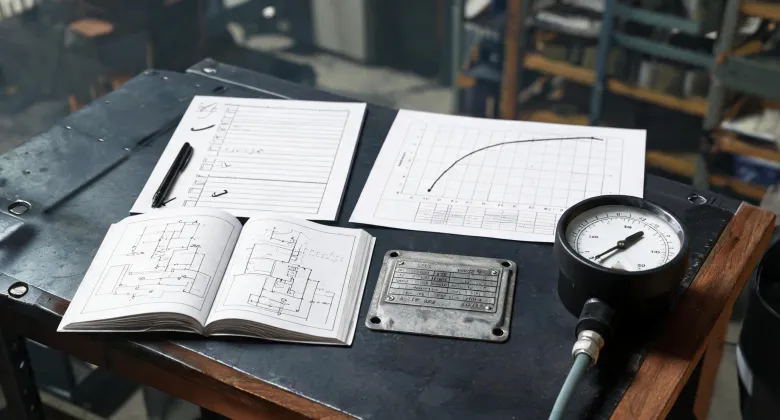
The first step is boring but non-negotiable. Find the nameplate on the pump and compare every field to the diagram or product data sheet. Model number, product number, serial number, RPM, and rated flow. Don't trust the order history. I've seen pumps swapped out during maintenance and never re-specified. If the diagram says one thing and the physical pump says another, the physical pump wins.
2. Read the Pump Curve, Not Just the Model Number
Why does this matter? Because two Grundfos pumps with similar model numbers can have very different performance. The model number tells you the family. The curve tells you the operating range—head, flow, efficiency, and NPSH. When you have a Grundfos water pump diagram, find the curve that corresponds to your exact impeller trim. A one-inch difference in impeller diameter can change the flow enough to make the whole system fail.
3. Verify Motor and Electrical Data
This is where things get dangerous in a hurry, especially for emergency orders. Check voltage, phase, frequency, and full-load amps. A standard Grundfos pump can be configured with multiple voltages, so don't assume that a 50Hz motor is exactly the same as a 60Hz one. What I mean is that the mechanical pump may look identical, but winding temperatures and performance curves are not. If you need a VFD, confirm that too. The diagram often includes the motor data table—use it.
4. Check Ports, Flanges, and Threads
For how often this gets overlooked, it deserves more attention than it gets. Is it a flange or threaded connection? NPT or BSP thread? DN25 or DN32 flange? There's nothing worse than receiving a pump that physically fits the baseplate but won't connect to your pipework. In March 2024, a client called 36 hours before a planned shutdown. The Grundfos water pump diagram they had looked correct, but the flange drilling on the actual pump had been changed to a different standard during a previous repair. We caught it just before ordering—barely.
5. Confirm Seal and Material Compatibility
The seal type matters as much as the motor. Is the shaft seal a cartridge seal or a standard mechanical seal? What's the elastomer material? Viton, EPDM, Nitrile? If the pump is handling water with certain chemicals, a standard seal might not last. The diagram or parts list should show the seal code. If it's not visible, ask for the parts breakdown before you order. A $60 seal failure can easily turn into a $3,000 motor failure.
6. Make the Filter Decision: OEM vs Private Label
Now let's talk about filters. A filter might seem like a separate item from the Grundfos water pump, but in practice it's part of the same hydraulic system. If you get the filter wrong, you can quickly change the pump's performance for the worse.
There are two paths: an OEM filter and a private label filter. An OEM filter carries the original brand and is built to the brand's specification. A filter private label part is manufactured by a supplier that also makes OEM products, but it's branded under another company—maybe yours, maybe a reseller. Does that automatically make it worse? No. Does it automatically make it the same? Also no.
Here's the practical difference: an OEM filter has a traceable specification from the original brand. A private label filter has the same or similar spec, but the brand on the label is not the one that wrote the spec. So the buyer's job is to compare data, not labels. Filter private label is a legitimate way to reduce cost and consolidate vendor lists, but only if the underlying spec is confirmed.
Let's settle the filter OEM vs private label question with three checks. One, compare the spec sheet: micron rating, flow rate, maximum pressure, connection size, and filter media. Two, compare the part number against the OEM cross-reference table. Three, test one unit before committing to a bulk order. In that order. I remember a client who bought a private label filter because the mounting bracket matched. The filter media had a lower burst pressure than their system could produce. That one component caused a $2,000 pump repair. The OEM spec sheet would have caught it in two minutes.
When you call a water pump manufacturer or a supplier, ask for the exact OEM part number and the private label equivalent. If they can't give you both, treat it as a warning sign. Good private label suppliers will happily share the underlying OEM reference because the data is the thing that earns trust.
7. Create a Paper Trail and Build a 24-Hour Buffer
This is the step most people skip. Once you've confirmed the Grundfos water pump diagram, the filter spec, and the motor data, save everything. Take a screenshot of the nameplate, the diagram, the pump curve, and the filter datasheet. Send it to the supplier in the same email. Ask them to confirm in writing that the part numbers match.
Then, if the timeline allows, build a 24-hour buffer in your schedule. In emergency situations, a 24-hour buffer feels like a luxury. But it is the best insurance you can buy. Rushed decisions are what get the diagram verification step skipped, and that's when mistakes happen.
Pitfalls I've Learned the Hard Way
A few closing warnings. Never assume that 'same specifications' means identical results across vendors or parts. The pump world is full of slightly different interpretations of standardized dimensions. Each vendor might be correct within their own tolerance—but different in practice. The most frustrating part of this work is that written specs still get interpreted differently by different suppliers. You'd think a diagram would end the debate; it doesn't.
Don't hold me to this as law, but in my experience, the difference between an OEM filter and a private label filter is rarely about the factory. It's about how much verification the buyer requires. A responsible supplier will give you the test data. The ones who say 'it will fit' without data are the ones who cause emergency calls.
There's something satisfying about a perfectly executed rush order. After the stress and the late-night calls, seeing a Grundfos pump installed with the right filter and the right documentation—that's the payoff. When you create a repeatable checklist, speed becomes a competitive advantage. Use it.

Rebecca Sloan
Rebecca Sloan is a power distribution and protection analyst specializing in circuit breakers, switchgear, contactors, fuses, surge protective devices, and coordination. She applies IEC 60947-2 breaker requirements, IEC 60269 fuse characteristics, and IEC 61643-11 tests while examining rated voltage, breaking capacity, time-current curves, selectivity, and prospective short-circuit current. She helps engineers and buyers compare protective devices against documented fault levels, installation conditions, maintenance access, and continuity priorities.