What to Check Before You Buy Grundfos Water Pumps in Bulk: A Quality Inspector's FAQ
2026-08-27 · Rebecca Sloan
-
FAQ
-
1. How do I verify a Grundfos water pump is genuine?
-
2. What should I check in a Grundfos water pump diagram?
-
3. If the batch arrives with wrong dimensions, what should I do?
-
4. Is it worth paying for rush delivery?
-
5. How do I evaluate a filter supplier for bulk orders?
-
6. What is a realistic fuel filter wholesale cost guide?
-
7. When should I upgrade specs instead of using the minimum requirement?
-
8. Is it excessive to request documents from a supplier?
-
1. How do I verify a Grundfos water pump is genuine?
I work as a quality and brand compliance manager at an industrial pump and filter supplier. I review pumps, filters, fuel pumps, starters, and spark plugs—roughly 200 unique items annually, maybe 230, I would have to check our tracking system. My job is to confirm that what is delivered matches what was specified on the purchase order. If you are buying Grundfos water pumps in bulk, the same paperwork that gets you a quick quote can become a nightmare if the goods arrive with the wrong flange or a missing certificate.
This FAQ covers what B2B buyers ask me most: how to check a Grundfos pump is genuine, what to look for in a grundfos water pump diagram, how to handle a rejected batch, and whether paying for faster delivery actually makes sense.
FAQ
1. How do I verify a Grundfos water pump is genuine?
Start with the nameplate. Genuine Grundfos pumps have a stamped or laser-etched serial number, not a printed sticker. The model on the nameplate should match the cast number on the pump casing or motor flange. I also look at the Grundfos logo for small molding flaws; counterfeit pumps often show rough edges around the lettering or off-center badges.
Ask for the serial number and trace it back through the supplier's inventory record. If they cannot trace the batch, be careful. I once accepted a supplier's paperwork without checking the date code on the outer cartons. The serial numbers belonged to a different production batch, and several of those pumps failed the vibration test after installation. It was an expensive way to learn that a paper trail is only useful if you verify it.
2. What should I check in a Grundfos water pump diagram?
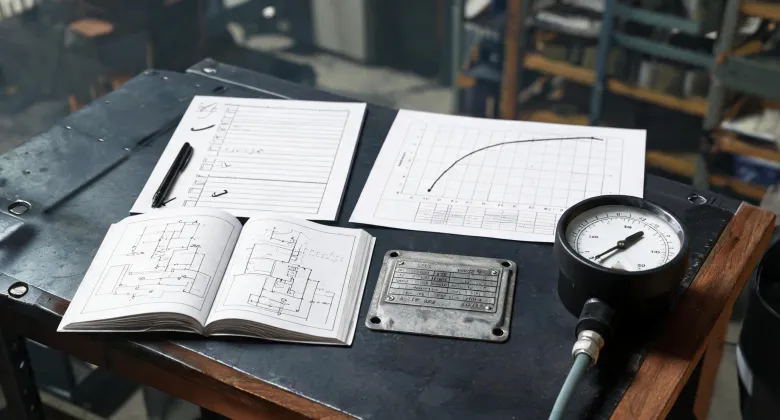
When someone asks for a grundfos water pump diagram, define what you actually need:
- An installation drawing shows flange sizes, bolt positions, and minimum clearance around the pump.
- A cross-section drawing shows the impeller, volute, mechanical seal, and motor coupling.
- A performance curve shows flow against head. This is the one that matters for selecting the right pump.
Ask for the diagram based on the serial number or full model code, not a generic image from search results. According to ISO 9906 testing criteria for rotodynamic pumps, the published performance curve should be traceable to real test measurements. Check the operating point on the curve against your system requirements. A pump can look correct on a spec sheet and still be wrong because the flange orientation or motor power is different.
3. If the batch arrives with wrong dimensions, what should I do?
Do not install it. Take photos with clear measurement references and issue a written non-conformance report. That gives you a clean basis for rejection under most supply contracts.
I remember a consignment of 40 Grundfos CR pumps where the terminal box position was rotated compared to the sample drawing. The vendor said it was 'within industry standard.' The pump would have worked, but our installation space made the terminal box inaccessible. We rejected the batch and made them rework it at their cost. If you do not have an incoming inspection clause in your contract, get one. Arrival inspection is your last line of defense before payment.
4. Is it worth paying for rush delivery?
Sometimes. It depends on what you lose if the pump is late.
What you are paying for is certainty, not just speed. If missing a deadline costs more than the rush fee, the rush fee is the rational choice.
We needed a replacement Grundfos pump for a customer's wastewater station. Normal delivery was nine days. The rush option got the pump on site in two days. The extra freight cost was a fraction of the cost of letting the station run at reduced capacity for a week.
Do not pay rush fees on every order. If your schedule has buffer, use standard delivery. But when the only alternative is a supplier who says 'should be there, probably,' the premium is insurance. The risk of an unplanned outage is more expensive than the premium.
5. How do I evaluate a filter supplier for bulk orders?
When you buy air filter wholesale or fuel filters in bulk, ask the supplier for the filtration efficiency data, not just a brand name and a price.
An air filter may look identical to another, but the media area, fiber diameter, and dust-holding capacity can be very different. If a supplier cannot tell you the micron rating or efficiency standard, do not buy from them. If they say 'it's equivalent to brand X,' ask for the test report. A low-cost filter that lets fine particles through can damage a compressor or engine. That repair bill will erase any initial savings.
Check gasket material on samples. We once tested an economy filter and found the gasket hardened after exposure to fuel. It worked in the warehouse, but failed under real operating temperatures. The filter was not bad; it was wrong for that application.
6. What is a realistic fuel filter wholesale cost guide?
In current wholesale trade listings, fuel filter prices range from about $6 to $35 per filter, depending on thread size, flow rate, filtration rating, and order quantity (based on trade listings, April 2026; verify current pricing). Larger bulk orders can reduce the unit price by ten to twenty percent, but that varies by supplier.
Do not compare only the per-unit price. A cheaper filter that needs replacing twice as often is not cheaper. Factor in the service interval and the cost of downtime. If a supplier is not transparent with specifications, treat the low price as a warning, not a win.
7. When should I upgrade specs instead of using the minimum requirement?
Upgrade when the cost of failure is high. In one review, we moved from a standard mechanical seal to a silicon carbide version on a set of pumps. The extra cost was around $40 per pump—maybe $55 if you count the additional machining. On a 40-pump order, that was just over $2,000. Every unplanned seal replacement at that site cost far more than $2,000 in labor and lost production.
Not every component needs to be upgraded, of course. If the application has redundancy or the pump is easy to service, a standard option is fine. Calculate the failure cost before you make the call.
8. Is it excessive to request documents from a supplier?
No. Ask for test reports, inspection records, and material certificates. If a supplier treats that request as unreasonable, that tells you something useful.
I asked one vendor for a third-party performance test report and was told that it was 'not typical in this industry.' That was not true. We moved the order to a supplier who sent the report with the quote. Oh, and one more thing: take photos of the container floor before unloading. When a crate arrives with damage, those photos are worth more than any email chain.

Rebecca Sloan
Rebecca Sloan is a power distribution and protection analyst specializing in circuit breakers, switchgear, contactors, fuses, surge protective devices, and coordination. She applies IEC 60947-2 breaker requirements, IEC 60269 fuse characteristics, and IEC 61643-11 tests while examining rated voltage, breaking capacity, time-current curves, selectivity, and prospective short-circuit current. She helps engineers and buyers compare protective devices against documented fault levels, installation conditions, maintenance access, and continuity priorities.