Ordering Grundfos Water Pumps and Starter Parts: A Checklist From Someone Who Messed Up
2026-08-31 · Rebecca Sloan
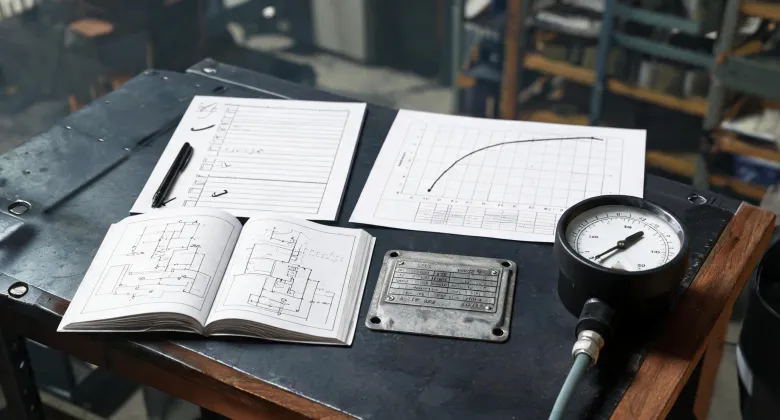
There is no one-size-fits-all PO
I've handled B2B equipment orders for seven years, and I've personally made and documented 11 significant mistakes, totaling roughly $14,000 in wasted budget. That's not a huge number for an industrial distributor, but it's enough to make me the person who now maintains our team's checklist.
Here's what I've learned: ordering a Grundfos Water Pump and the starter parts around it isn't the same every time. Most orders fall into one of three buckets: replacing an existing pump, building a new system with motor starters, or building a vendor list for ongoing purchases.
Scenario 1: You're replacing an existing Grundfos pump
This is the easiest scenario, but it's also where I wasted my first $890. In my first year, I had to replace a Grundfos pump at a food processing plant. I checked the price, confirmed the model number, and placed the order. What I did not do was open the Grundfos water pump diagram for that exact model.
Why does that matter? Because the diagram shows the port orientation and the terminal box side. The old pump was vertical with the outlet on the left. The replacement I ordered was horizontal with the outlet on the right. The piping didn't line up. The customer's maintenance team looked at me like I was trying to hand them a square wheel.
Not ideal, but workable. Except it wasn't workable at all.
Grundfos publishes product dimensions and performance curves in the Grundfos Product Center, and the Hydraulic Institute test standards are the reference point if a supplier proposes a substitute model. But the one thing I never skip now is the diagram. The drawing tells you the truth before the pump ever arrives.
- Check the full model suffix, voltage, phase, and Hz.
- Find the Grundfos water pump diagram for the exact model and look at the flange orientation.
- Verify the motor frame, shaft diameter, and whether the pump is close-coupled or end-suction.
One more thing on replacements: if the original unit has a Grundfos serial number, use it. The serial number can pull up the original build configuration in the Product Center. That saved me once when someone had already swapped the motor frame on a pump. The diagram alone would not have caught it.
Scenario 2: You're building something new—and buying bulk starters
The second scenario is where bulk starter orders turn into career events. A starter is not a generic part. It has a coil voltage, an overload relay range, an enclosure type, and a horsepower rating. All of those need to match the motor and the control system.
I once ordered 16 bulk starters with 24V DC coils. Our control panel in that project ran on 120V AC. I made an assumption based on a different project. We discovered it during commissioning. 16 starters, about $1,800 in product, plus two days of electrician overtime to swap them.
For context, based on publicly listed distributor prices in January 2025, a NEMA Size 1 starter with a 120V coil runs somewhere between $150 and $400 depending on the enclosure. The range is wide. Ordering by 'starter size' instead of the full catalog number is how you end up with an expensive shelf ornament.
That mistake taught me to ask three questions before any bulk starter purchase:
- What is the motor's full-load amp (FLA) and service factor?
- What control voltage does the panel actually use?
- What enclosure rating do we need—NEMA 1, NEMA 4, or something for an outdoor installation?
And don't let the word 'bulk' fool you. Buying bulk starters means you are responsible for the same spec on every unit. In the last 18 months, our pre-order checklist has caught 47 potential errors. Most were mismatched coil voltages and wrong overload blocks.
And when you're talking to a starter distributor, make sure the other person is thinking about the same thing. I said 'starter distributor' to a supplier once, and they heard 'ignition distributor for a fleet of trucks.' The box that arrived was full of parts we couldn't use. We were using the same words but meaning different things.
On the technical side, IEC contactors and NEMA starters are not interchangeable in practice. IEC units are compact and easier to source globally; NEMA starters are generally more conservative in sizing. Neither is wrong if it matches the design. The wrong one is the one you ordered by habit.
Scenario 3: You're building a vendor list—or acting as the distributor yourself
The third scenario is less exciting but more likely to affect your bottom line for years. You're not buying one pump; you're stocking parts, or you're evaluating suppliers for ongoing projects.
This is literally a fuel pump distributor buying guide question. A fuel pump distributor buying guide isn't a list of brands. It's a set of questions I now ask before I add a new vendor to our approved list:
- Do they publish technical data, diagrams, and cross-reference charts without hiding them behind a login?
- What is the return policy for a wrong part?
- Who answers technical questions after the invoice is paid?
- What lead time are they quoting, and what happens when they miss it?
Another question I ask every potential fuel pump distributor is whether they handle warranty claims themselves or pass you to the manufacturer. That difference decides whether a failed pump means one phone call or six emails. A distributor that owns the claim process saves you a ton of time.
It's tempting to think you can just compare unit prices. But identical specs from different vendors can result in wildly different outcomes. We once saved $300 on an annual starter distributor contract. When a batch of contactors failed at a customer site, the warranty replacement took three weeks. The downtime cost us around $5,000. Honestly, the $300 savings looked a lot less clever afterward.
The 'always buy local' advice comes from an era before modern logistics. A remote distributor with a deep stock position and a clear return process can often beat a local one who has to backorder everything. Then again, a local distributor who actually stocks the right parts can be worth their weight in gold. The rule isn't local vs. remote; it's who has the part and who owns their mistakes.
Actually, I almost dropped a starter distributor once because their quote was a bit higher. Then they turned around a compliance document in 15 minutes for an audit. Responsiveness matters more than a small quote difference.
I have mixed feelings about 'never switch away from OEM.' On one hand, a genuine Grundfos pump is the only way to guarantee the published performance curve. On the other hand, filters, contactors, and some auxiliary components can come from reputable specialty manufacturers if you verify the specs. The key is to confirm, not assume.
How do you know which scenario you're in?
Ask yourself three questions:
- Is there an existing pump or part you're matching? That's scenario 1.
- Are you installing a new system, or buying multiple starters for inventory? That's scenario 2.
- Are you qualifying a supplier for ongoing bulk orders? That's scenario 3.
If you're in more than one, do scenario 1 first. Get one part right before you trust a supplier with twenty.
The checklist I created after my third serious mistake has saved us an estimated $8,000 in potential rework in the last 18 months. Five minutes of checking a diagram beats five days of return shipping. The return labels aren't the expensive part. The lost production time is.
Bottom line: know your Grundfos water pump diagram, verify your starter coil voltage, and treat every fuel pump distributor buying guide as a process, not a coupon.

Rebecca Sloan
Rebecca Sloan is a power distribution and protection analyst specializing in circuit breakers, switchgear, contactors, fuses, surge protective devices, and coordination. She applies IEC 60947-2 breaker requirements, IEC 60269 fuse characteristics, and IEC 61643-11 tests while examining rated voltage, breaking capacity, time-current curves, selectivity, and prospective short-circuit current. She helps engineers and buyers compare protective devices against documented fault levels, installation conditions, maintenance access, and continuity priorities.