A Grundfos Water Pump Costs More Than Its Quote: Why I Buy on TCO, Not Sticker Price
2026-08-31 · Rebecca Sloan
I work as a quality and compliance reviewer for a company that supplies Grundfos water pumps and related industrial components. I check around 200 unique line items a year before they reach customers, and in the Q1 2024 audit I rejected just over 11% of first samples because the documentation didn't match the product. So when I say I care about what a pump actually costs, I'm not just talking about the number at the top of an email quote.
Here's what I believe: most industrial pump buying mistakes start before the purchase order, when someone compares unit prices instead of total cost. Unit price is the entry fee. TCO is the price you actually pay.
Price is what you quote. Cost is what you manage.
The largest cost is not on the invoice
From the outside, comparing pump quotes looks rational. Two documents, same flow, same head, pick the lower one. The reality is different: quotes hide assumptions more than they reveal quality. The cheapest quote often assumes optimistic efficiency, minimal support, and no consequences if it misses spec.
According to Hydraulic Institute lifecycle cost materials (pumps.org), energy and maintenance together dominate the lifetime cost of a typical industrial pump. I don't remember if the rule of thumb is 85% or 70%—it depends on duty cycle—but the direction is always the same: what a pump consumes, and what it needs to stay alive, matters more than what it costs to buy.
Here's something vendors won't tell you: the first quote is almost never the total picture. Shipping, installation, commissioning support, spare parts, energy use, downtime risk, and rework all belong in the comparison. What I mean is that a $4,000 pump can become a $10,000 installation if the starter, controls, fitting kit, and startup testing are excluded from the analysis.
Read the curve, not just the diagram
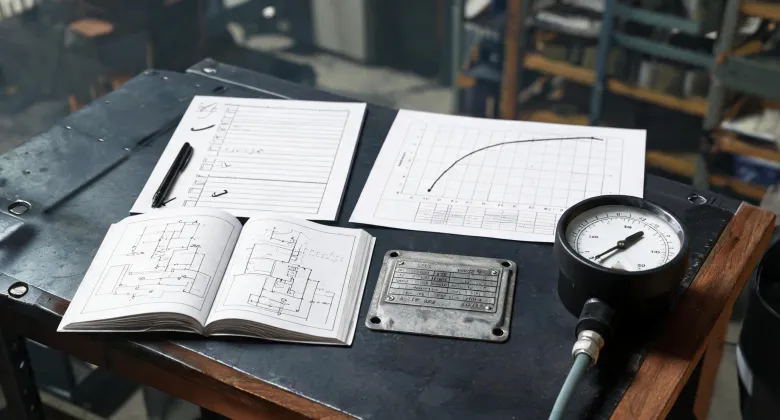
When a procurement package includes a 'grundfos water pump diagram,' I usually know what the buyer wants: an exploded view of the pump, impeller, shaft seal, and motor. That's useful. But the diagram I want to see first is the performance diagram. A Grundfos Water Pump is not a static component; it's a machine with a sweet spot. The pump OEM publishes curves for a reason.
I once caught a potential order for 14 pumps where the specification called for 18.5 kW motors. The submitted curve showed the duty point in the low-efficiency zone. We asked the customer to re-check the actual duty point, and it turned out the required duty was better served by a 15 kW model. They saved on motor cost, energy cost, and the starter component. Not ideal, but workable—and a lot cheaper than the original plan.
That's the point: a diagram shows you what is inside; a curve shows you whether it will do the job. If you're buying a replacement pump, ask for the curve at your exact duty point, not just the model number.
The same logic applies to starters and filters
I know the product range is wider than pumps, and the TCO habit still works. When I evaluate a starter manufacturer, I don't stop at the part number and price. I look at duty cycle, compatibility with the existing system, and whether spares will be available in five years. A starter that saves you $200 on paper can cost you a full day of installation when the mounting pattern or settings don't match.
And when someone asks me how to evaluate air filter manufacturers, I don't start with price per filter. I ask about media area, filtration efficiency, initial pressure drop, dust holding capacity, replacement interval, and disposal requirements. The filter that saves $2 upfront but needs replacing twice as often is not a bargain. It's a tax on your maintenance team.
Same method, different component. TCO is not a calculation you do once for pumps. It's a habit.
I learned this by ignoring it
I wasn't always this annoying about curves. In 2022, I approved a purchase of 24 pumps for an industrial loop because the budget option was about 11% cheaper than the Grundfos configuration on paper. We were under budget pressure. We compared motor power, connection size, and price. We skipped the curve verification.
When the pumps were installed, measured flow was about 7% below spec at the design head. The supplier said 'within industry tolerance.' We rejected the batch. They redid it, but the rework didn't fix the pipe layout we had already built. The re-piping, retesting, and delay added roughly $19,000 to a project originally quoted at $34,000. The 'cheap' quote ended up costing more than the Grundfos quote we had dismissed.
Everyone told me to check the performance curve before committing. I only believed it after eating that mistake. The surprise wasn't the price difference; it was how much of my own time the failure consumed.
But what if the pump only runs in an emergency?
I have mixed feelings about applying an energy-focused TCO model to every pump. If a pump runs ten hours a year, the electricity bill is the least of your concerns. In that case, the total cost of ownership still matters, but it points in a different direction: installation labor, starter reliability, and whether the pump can sit for long periods without seizing. A cheap pump that starts when you genuinely need it is not the same as a cheap pump that fails in an emergency.
That's the important part. TCO isn't a slogan for saying 'buy the premium option.' It's a method for deciding where the cost actually sits. Sometimes the answer is the lower initial investment. But it should be an answer, not a default.
The checklist I run on every package: duty point confirmed, performance curve checked, energy modeled over the expected runtime, consumables and spares priced, installation and commissioning scope defined, documentation verified. In that order.
Bottom line
I still receive purchase orders with 'choose lower price' written on them. I still look for a good deal. But I also ask what the pump will do after it's installed, how it will be maintained, and what it will cost to replace.
A Grundfos Water Pump is not a commodity to be picked by the lowest unit price. It is an engineered component that either matches its system or creates hidden costs for years. I'm not apologizing for how I evaluate quotes now. Buy on TCO, not on sticker price. Your future maintenance manager will thank you.

Rebecca Sloan
Rebecca Sloan is a power distribution and protection analyst specializing in circuit breakers, switchgear, contactors, fuses, surge protective devices, and coordination. She applies IEC 60947-2 breaker requirements, IEC 60269 fuse characteristics, and IEC 61643-11 tests while examining rated voltage, breaking capacity, time-current curves, selectivity, and prospective short-circuit current. She helps engineers and buyers compare protective devices against documented fault levels, installation conditions, maintenance access, and continuity priorities.