The "Grundfos Water Pump" Trap: What B2B Buyers Actually Pay For (And Why the Cheapest Quote Isn't)
2026-09-14 · Rebecca Sloan
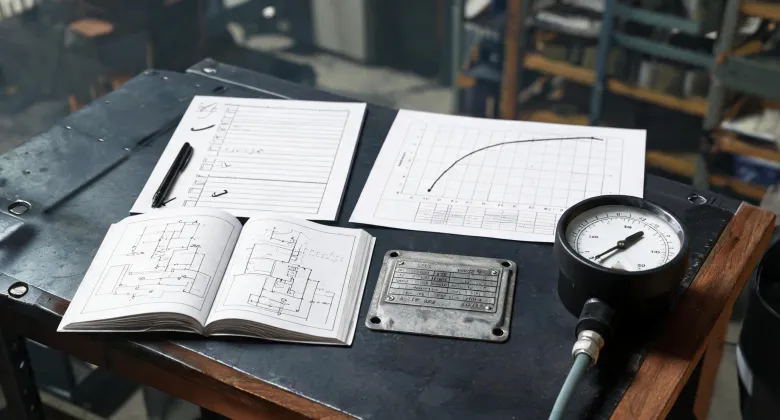
The quote that looked amazing — until the invoice arrived
If you've ever chased down a Grundfos water pump quote, you know the drill. You send out five RFQs. Three come back with more or less the same number. One comes back way lower. And one doesn't reply at all.
I've been on the buying side of industrial pumps and related parts for eight years now. I manage about $340,000 a year in MRO and equipment spend for a mid-size food processing operation. Every invoice goes into our cost tracking system since 2018 (yes, I actually built the spreadsheet and yes, my team hates it). When I say I've seen the "too good to be true" quote play out badly, I mean it — at least four times.
Here's what most B2B buyers think the problem is: finding the lowest price on a genuine Grundfos water pump.
That's not the problem. The problem is that the price on the quote is almost never what you end up paying.
Why the cheap quote isn't cheap
A Grundfos water pump itself is a well-engineered machine. Grundfos has been making pumps since 1945 and their CR, MAGNA3, and SCALA lines are genuinely solid — I'm not here to knock the product. The issue is what happens around the pump.
When a supplier quotes you 20% less than everyone else, one of four things is happening:
- It's a private label unit dressed up as OEM. This is the big one. A private-label pump might meet the same flow and head specs, but the impeller tolerance, seal material, and motor winding are often a tier down. It'll run fine for 18 months, then fail right when you need it most.
- The quote excludes "extras" that aren't really extras. Freight, crating, customs documentation, flange kits, and commissioning support all get added after the fact.
- Warranty is effectively unenforceable. If the "official" channel can't verify your unit, you're on your own when it fails.
- You're buying a discontinued or gray-market unit. No service parts down the line means you're replacing the whole thing instead of a $90 seal kit.
I don't have hard industry-wide data on how often each of these happens — nobody publishes that honestly — but based on our own order history since 2019, roughly 1 in 5 "bargain" pump purchases triggered some kind of post-sale cost we hadn't budgeted for.
The real cost isn't the pump. It's the downtime.
Here's the number that changed how I buy: one hour of unplanned downtime on our main process line costs us $2,300 in lost throughput. Add labor, spoilage, and the rush-order premium to get back up, and a single pump failure typically runs $8,000–$12,000 all-in.
Now compare that to a genuine Grundfos CR pump that costs $400 more than the private-label "equivalent." The math isn't close.
"5 minutes of verification beats 5 days of correction."
I didn't always think this way. Back in 2022, we bought three private-label circulation pumps for a chemical dosing loop to save about $1,200 on the order. Two of the three failed within 14 months. The third is still running, which is the kind of thing that makes you paranoid, not confident. Total cost to replace the two failures — including the expedited shipping and the Saturday overtime — came to $7,900. That's a 560% loss on a 12% savings.
When I compared that order side by side with our 2021 Grundfos order — same function, different specs — the difference was obvious. The Grundfos units went 4+ years before we even needed a seal kit. The private-label ones barely made it through warranty.
The Grundfos water pump diagram nobody shows you
If you've searched for a "grundfos water pump diagram," you probably found the standard exploded view — impeller, shaft, seal, motor housing, all labeled neatly. Useful for maintenance planning. Not useful for procurement.
The diagram that actually matters is the one in Grundfos's own product documentation (I use the CR series literature, available at grundfos.com under "Products & Services"). It shows which components are Grundfos-manufactured versus sourced. That's the line where OEM ends and private label begins — often inside the same pump.
Here's what I mean. A pump can be a genuine Grundfos assembly and still have aftermarket seals, a third-party flange, or a non-Grundfos motor. Some of that is fine. Some of it isn't, depending on the application. If you're moving clean water at ambient temp, don't overthink it. If you're moving food-grade product or chemical slurry, the seal material is the pump.
The checklist I wish I'd built three years ago
We didn't have a formal verification process for pump purchases before 2023. It cost us — I already mentioned the $7,900 lesson, but there were smaller ones too. A wrong flange size here, a missing documentation packet there. Death by a thousand change orders.
The third time we ordered the wrong seal kit for a pump that had been "upgraded" by the supplier without notice, I finally built the checklist. It's 12 items. It takes about 15 minutes per order. It has probably saved us $11,000+ in rework since.
Here's the short version, minus the internal columns:
- Confirm the pump model and serial before the PO goes out, not after delivery
- Get the component-level origin in writing (OEM vs. aftermarket)
- Verify seal and gasket material against your actual media, not the sales sheet
- Ask for the commissioning support scope in writing — "support available" is not a scope
- Confirm the warranty channel (who actually honors it, and how)
- Get the spare-parts lead time in writing
- Photograph and log the unit on arrival, before it's installed
None of that is revolutionary. That's the point. The problems are usually boring, predictable, and preventable.
What this means if you're sourcing Grundfos water pumps
Two practical takeaways, and then I'll stop.
First: quiz your supplier on component origin. If they can't or won't answer clearly, that's your answer. A real industrial pump supplier should know the difference between OEM and private label and be able to tell you which one they're selling. Precision matters more than price here.
Second: price the whole thing, not the unit. Add estimated freight, install, commissioning, and one full life-cycle's worth of spare parts. If a supplier can't give you the spare parts list, they're probably not planning to support the pump beyond the sale.
I don't have a perfect formula for choosing the right Grundfos water pump supplier. What I have is eight years of invoices, three genuine mistakes, and a checklist that keeps the fourth one from happening. That's honestly the best I've got.
And if you're still comparing quotes on price alone — trust me on this one — the cheap quote is the expensive one. You just haven't seen the invoice yet.

Rebecca Sloan
Rebecca Sloan is a power distribution and protection analyst specializing in circuit breakers, switchgear, contactors, fuses, surge protective devices, and coordination. She applies IEC 60947-2 breaker requirements, IEC 60269 fuse characteristics, and IEC 61643-11 tests while examining rated voltage, breaking capacity, time-current curves, selectivity, and prospective short-circuit current. She helps engineers and buyers compare protective devices against documented fault levels, installation conditions, maintenance access, and continuity priorities.