Why the Cheapest Grundfos Water Pump Quote Is Usually the Most Expensive
2026-09-10 · Rebecca Sloan
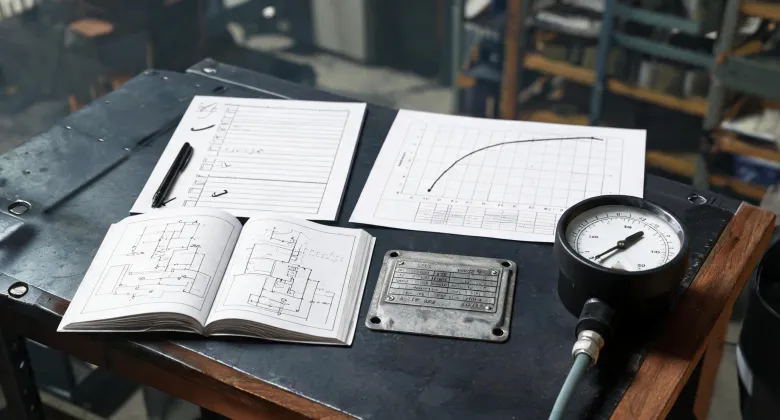
Here's my opinion, and I'll keep it direct: if you're buying a Grundfos water pump under a deadline, the cheapest quote should be a red flag, not a green light. That sounds backwards. Most procurement instincts say to save money when time is tight. But after years of handling emergency pump orders for industrial clients, I've watched more than one budget-saving purchase turn a simple replacement into a second emergency.
Let me explain why I've landed on this stance.
Price Is the Worst Decision Filter
From the outside, every quote for the same water pump model looks like it should be identical. The reality is a little messier.
The pump might be the same model, but the warranty terms can be different. The unit price might exclude freight, crating, or the test documentation you didn't know you needed. Add expediting fees, after-hours delivery, or an engineer's overtime to install the wrong flange, and suddenly the cheapest quote becomes the most expensive one.
I look at these purchases through total cost of ownership, or TCO. That's not a buzzword. It means counting everything between the purchase order and the pump running reliably in your system:
- Base purchase price
- Freight and handling
- Time spent verifying specs and dimensions
- Installation labor and potential re-installation labor
- Downtime costs if the delivery is wrong or late
- Cost of chasing warranty support later
Unit price is just the tip. The hidden costs are usually below the waterline.
I remember an order in March 2024, about 36 hours before a client's plant window closed. They needed a replacement Grundfos CR pump, and the quote they'd accepted was roughly $400 less than the faster option. But the pump that arrived had a nameplate mismatch, and the supplier couldn't produce a test certificate. We spent the better part of a day hunting down another unit. The $400 saving disappeared once freight, overtime, and the extra night were added. Actually, it was more like $800 once I counted the engineer's time. That was the moment I stopped making decisions based on sticker price.
The Diagram Test
People assume that the same part number means the same physical pump. I learned never to assume that after we received a pump that looked correct from the front but had a different discharge orientation than the diagram.
Look, I'm not talking about a Grundfos quality issue. Grundfos publishes detailed technical documentation for a reason. A Grundfos water pump diagram shows you bolt positions, shaft rotation, coupling type, and port sizes. It's there to help you verify before installation, not after.
Whenever I'm triaging a rush order, I ask the buyer to send a nameplate photo and pull up the relevant diagram before I call anyone. Then I ask the supplier a very simple question: does your quote confirm every detail on this diagram?
If a supplier can't answer that within an hour, that tells you who is going to answer the phone if something doesn't fit. The cheapest quote in the spreadsheet starts looking a lot less attractive when you realize you're also taking on the verification work yourself.
A diagram won't tell you everything, though. You also need to check impeller material, elastomers, and motor voltage. If your process handles hot water or chemicals, a standard pump configuration might not be right. That's another place where a rushed, price-focused decision can cause a very expensive problem later.
Bulk Orders Have Their Own Hidden Costs
So far, I've been talking about a single pump. But the total cost logic gets even stronger when you're buying in bulk.
Take a bulk fuel filter order, for example. Filters can look identical from the outside, but the micron rating and dirt-holding capacity aren't visible on the packaging. In a fuel system, choosing the wrong micron rating can cause pressure drop, premature plugging, or even damage to injectors and pumps. The cheapest filter is no bargain if it fails during a critical run.
Same logic applies to electrical components. If someone asks me how to choose starter for wholesale inventory, I usually answer with a question: what is the full load amp range of the motor you're protecting?
A motor starter isn't just a switch. It's a protection device. The overload relay range, coil voltage, enclosure type, and duty rating all matter. Saving $10 per unit on a starter that doesn't match the motor can mean nuisance trips, overheating, or worse. When you're buying starters for wholesale, you're not just buying parts. You're buying reliability that your customers will depend on.
I'm not saying every non-genuine or generic option is garbage. I'm saying that when you don't know the difference, you're gambling with your timeline. That's especially risky in B2B supply, where one failed component can shut down an entire operation.
What About the Buyer Who Truly Has No Time?
Then again, I get it. There are moments when you genuinely don't have time to run a full TCO analysis. The plant is down, the line is stopped, and every hour is lost revenue. I've been in those rooms.
But that's exactly when a structured approach pays off. TCO thinking isn't a luxury. It's what lets you make a fast decision without making a reckless one.
When I'm triaging an emergency order, I don't ask which vendor is cheapest. I ask three questions:
- Can you confirm the exact model and configuration today?
- Can you provide the required documentation or test certificate?
- Can you commit to a delivery window and actually hit it?
If the answer to all three is yes, I'll pay a premium for that certainty. Actually, I prefer to call it insurance. The premium is small compared to the cost of a failed delivery when your own customer is waiting.
To be fair, I should note that not every expensive option is better. We've seen new vendors with high quotes but no stock. We've also seen established distributors with stock but poor communication. The point isn't to always pick the highest price. The point is to calculate the risk before you commit.
Bottom Line
When I source a Grundfos water pump for a client, I don't want the quote that looks cheapest in the bid table. I want the quote with the lowest chance of creating a second emergency.
That means verified part numbers, available test records, honest lead times, and somebody who answers the phone when something goes wrong. For a single pump, a bulk fuel filter order, or a starter for wholesale stock, the principle is the same: price is what you pay, but total cost is what you actually live with.

Rebecca Sloan
Rebecca Sloan is a power distribution and protection analyst specializing in circuit breakers, switchgear, contactors, fuses, surge protective devices, and coordination. She applies IEC 60947-2 breaker requirements, IEC 60269 fuse characteristics, and IEC 61643-11 tests while examining rated voltage, breaking capacity, time-current curves, selectivity, and prospective short-circuit current. She helps engineers and buyers compare protective devices against documented fault levels, installation conditions, maintenance access, and continuity priorities.