Why Your Grundfos Water Pump Order Can Fail Even When the Part Number Matches
2026-08-31 · Rebecca Sloan
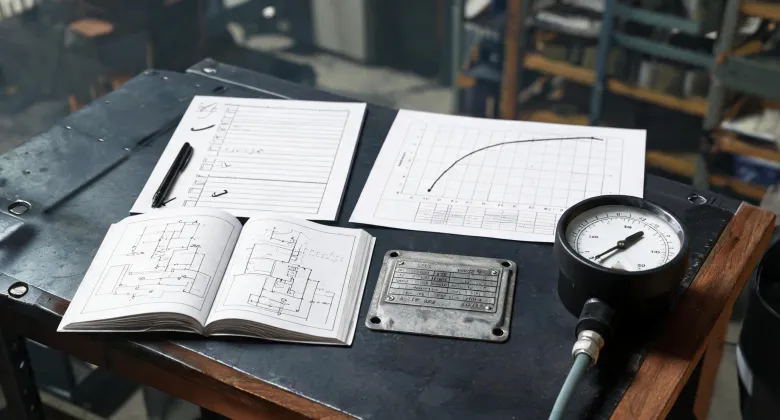
I've spent the last 8 years on the procurement side of industrial orders, mostly pumps and related components. I've personally made—and documented—14 significant mistakes. Together they cost roughly $26,000 in wasted budget. This article is about the one that taught me the most: a Grundfos water pump order that looked perfect on paper and failed on the floor.
The customer sent a photo of the pump label. I matched the part number to a listing, confirmed the price, and placed the order. Delivery took 11 days. On install, the flange offset didn't line up. The motor frame looked right, but the terminal box was rotated in a way that hit the guard rail. The pump was real Grundfos. The application was wrong. Actually, let me rephrase that: the pump was right, but the variant was wrong. $3,200, straight to the trash.
The Mistake That Started It All
At first, I thought the problem was the supplier. Then I looked closer. The supplier sent exactly what I ordered. I ordered a model that looked like the photo, but I didn't order a spec. The part number was one component of the spec. It wasn't the spec itself.
If you search for 'grundfos water pump diagram', you'll find hundreds of images. Most are product photos with a few dimensions pasted on top. That's not a diagram. A real diagram shows flange dimensions, connection sizes, motor data, and a revision code. It tells you whether the inlet is on the left or right, whether the seal is cartridge or mechanical, whether the motor is 2-pole or 4-pole.
Here's what I learned too slowly: the diagram is a specification, not a suggestion.
Why the Part Number Wasn't Enough
It took me about four years and 60 confused emails to understand the difference. A Grundfos model number can look like a short code on an online listing, but the full type code on the pump label has more letters and digits than anyone wants to type. Each one means something: impeller material, shaft seal, voltage, frequency, connection size, even packaging.
The 'same' pump in a photo can be built with different shaft seals or a different motor version. If you're not looking at the full type code, you're guessing. I once approved a CR-style pump based on the picture and the primary part number. The flange offset was six inches off from what the installer expected. That was the $3,200 mistake. The redo took another week, plus a rushed freight charge.
So when someone asks for a Grundfos water pump diagram, I ask which one. Which revision? Which type code? Which motor data? If the answer is 'the one on the website', we're not ready to order yet.
As of April 2026, Grundfos still provides dimensional drawings and performance curves in its Product Center. A supplier who sends a PDF with a drawing number, revision date, and test standard—usually ISO 9906 for hydraulic performance—is a good sign. A screenshot with no revision is a red flag.
The Same Trap, With 'OEM' Parts
This problem doesn't stop at pumps. The phrase 'starter OEM' is one of the most dangerous terms in B2B ordering. It looks like a simple spec. It isn't.
I once placed a small order for starter units described as OEM. The seller meant 'OEM quality.' The customer meant 'original equipment manufacturer, with original traceability.' Nobody wrote down which definition was in force. The parts arrived, the labeling didn't match the approved sample, and the whole batch was rejected. The cost was $890 for re-labeling plus a 2-week credibility hit.
Now I treat 'starter OEM' as a placeholder, not a specification. The order has to name the original manufacturer or the approved source, and it has to state what documentation proves it. If it doesn't, we don't buy.
Compliance Is Not a Sticker
The same logic applies to fuel filters and fuel pumps. In 2023, a 14-piece order that included a Grundfos pump and several fuel filters was held at customs for nine days. The pump was correct. The filters were correct. The compliance declaration was not: it didn't list the batch number on the packing list.
That's when I stopped treating compliance as a checkbox. Fuel pump compliance requirements aren't a sticker on the side of the box. They're a chain of documents connecting the product, the certification, and the shipment. CE, UKCA, UL, ATEX—whichever applies—the declaration needs to match the specific unit, not just the model family.
For fuel filter sourcing, the same principle shows up a different way: a filter that meets a spec on paper can fail if the country-of-origin mark is missing or the flow direction isn't printed on the housing. Small details, big delays.
The Real Price of Skipping the Details
Let me be concrete about the damage. One $3,200 pump went to the trash. Another $890 went to re-labeling starter units. A three-day production delay came from a compliance document mismatch. Those aren't catastrophic line items by themselves. Together, they represent the difference between a smooth procurement operation and one that constantly puts out fires.
The worst cost is credibility. When you're the person who signed the PO, a 'small documentation mistake' gets remembered for a long time. The savings from the lowest quote disappear quickly; the memory of the rework doesn't.
Why does this matter? Because the root cause isn't supplier quality. It's incomplete information. The supplier can only quote what you define. If your definition is a picture and a part number, that's what you'll get.
Here's the thing: I used to focus on 'what does it cost?' Now I ask 'what's NOT included?' That single question exposed $600 in import documentation fees that were in the vendor's rate card but not on the first quote. The vendor wasn't hiding it. I just never asked.
'What's NOT included?' is now the first question I ask. It's more useful than 'Can you match this price?'
I'm not claiming every supplier is transparent. I'm saying that a supplier who lists fees upfront—even if the total looks higher—usually costs less in the end. You can plan around a known cost. You can't plan around a surprise.
The Short Checklist I Use Now
If this article helps you avoid one mistake, the useful part is this checklist. It's not a full procurement manual. It's the list I keep on my desk to stop the expensive errors before they start.
- Get the drawing, not the image. For any Grundfos water pump order, ask for the dimensional drawing as a PDF with a revision number. If it can't be produced, assume the supplier doesn't know exactly what they're selling.
- Match the full type code. The online listing might say 'Grundfos water pump.' The label says something longer. Make sure the full type code on your PO matches the full type code on the pump label.
- Define OEM in writing. For starter OEM orders, name the original manufacturer or the approved source. Don't accept 'OEM quality' as a spec.
- Check compliance before the invoice. For fuel filter sourcing and fuel pump compliance requirements, ask for the declaration, test report, or certificate up front. Verify that the serial number or batch number on the document matches the product. If it doesn't, don't ship.
- Ask what's not included. Do this before talking discounts. It's faster and more useful.
I still make mistakes. The checklist doesn't make anyone perfect. But in the last 18 months, it's caught 47 potential errors that would have caused returns, customs holds, or installation delays. That's enough for me to keep using it.
The goal isn't to be the supplier with the lowest number in a spreadsheet. It's to be the person who can say, with confidence, 'this order will work when it arrives.' That confidence only comes from the details most people skip.

Rebecca Sloan
Rebecca Sloan is a power distribution and protection analyst specializing in circuit breakers, switchgear, contactors, fuses, surge protective devices, and coordination. She applies IEC 60947-2 breaker requirements, IEC 60269 fuse characteristics, and IEC 61643-11 tests while examining rated voltage, breaking capacity, time-current curves, selectivity, and prospective short-circuit current. She helps engineers and buyers compare protective devices against documented fault levels, installation conditions, maintenance access, and continuity priorities.