Why Replacing a Grundfos Water Pump Took Me Three Weeks (And What It Taught Me About Specs)
2026-08-31 · Rebecca Sloan
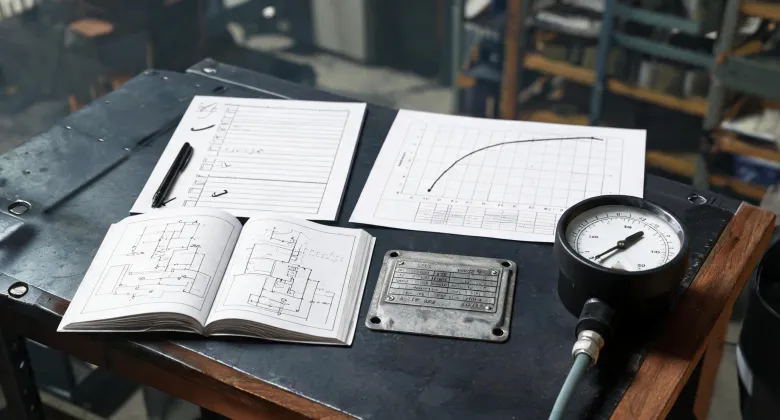
A Tuesday Morning I Still Remember
At 9:20 on a Tuesday, maintenance called me. The South process pump—a Grundfos water pump we'd installed in 2017—made a noise like a handful of bolts in a blender, then stopped. The line would trip in about 45 minutes when the cooling water temperature hit the alarm limit.
At that time, I'd been the office administrator for about four years. I manage all MRO purchasing for a 300-person food processing plant: roughly $400k a year across 12 vendors. I'm not an engineer. I know how to create a PO, not how to calculate NPSH. So when the pump died, I did what any sensible buyer would do. I searched the old invoices, found the model number, and told finance it would be a quick replacement.
That was the first mistake. Actually, that was the first mistake in a series. The next three each took a week to uncover.
The Three Delays That Made Me Look Like an Amateur
The old invoice said: Grundfos water pump, CR 15-3, 5.5 kW. I called our regular industrial supplier and said, “We need the same pump.” They heard, “We need the same mounting configuration.” Those are different things.
When I finally looked at a current Grundfos water pump diagram for the CR 15-3, the hydraulic footprint was close, but the baseplate option had changed. The old unit had been installed on a custom steel adapter because the concrete base was slightly smaller than standard. The new standard baseplate didn't fit. The supplier quoted a pump that wouldn't sit down without reworking the foundation. Not by a lot. Enough to cause a delay.
That was Delay #1. Then I hit the electrical side.
Delay #2: The starter manufacturer knew more than I did
The existing pump's starter came from a separate starter manufacturer—not from Grundfos. It had a thermal overload relay, and the setting had been adjusted over the years. No one had kept the original motor data sheet. When I asked the starter manufacturer for a replacement relay, they asked for the motor full-load amps. I didn't know it. They couldn't help me. Not because they were unhelpful—because I didn't understand their job.
A starter doesn't just switch power on and off. It protects the motor. The relay setting must match the motor's actual FLA. The new pump's motor, even if it had the same frame size, could draw different amps. We had to wait for the pump quote to see the motor data, then go back to the starter manufacturer. It was circular, and it ate days.
Delay #3: The industrial pump catalog exposed the real problem
A reseller sent a 140-page industrial pump catalog and told me to find the closest thing. I skimmed the first forty pages, saw a lot of curves and tables, and had no idea what I was looking at. So I called our plant engineer and asked him to help me read it.
It turned out the old pump was oversized. The process actually needed less flow than the pump family was designed to deliver. The installed unit was throttled down so far that the duty point sat at the edge of the factory curve. That explained why the seal had failed twice in three years. The nameplate I'd trusted so much described what the pump could do—not what our system needed.
Everything I'd read about pump replacement said copy the existing nameplate and move on. My experience with one stubborn pump says otherwise. The nameplate is only the beginning.
How I Finally Got It Right
After three weeks of wrong quotes and missed calls, I built something boring and incredibly useful: a one-page pump specification guide for our own use. It's now in our shared drive.
Here's the process that finally worked:
- Photograph the nameplate and confirm it against the invoice. Model, serial number, motor kW, voltage, full-load amps. Reconcile any differences before you call anyone.
- Pull a current Grundfos water pump diagram. I used the public Grundfos Product Center. Check the flange orientation, baseplate dimensions, and overall length. If you can't confirm those dimensions, you're buying a pump that might fit in the room but not in your existing piping.
- Define the duty point. Flow and head. If your plant doesn't know, have an engineer measure it. No flow and head, no selection.
- Treat the starter as a separate technical decision. Contact the starter manufacturer with the motor's FLA and motor category. Confirm the overload relay range and the contactor rating. Do not let a pump reseller guess.
- Write a one-page specification guide that includes the pump model, the motor data, the starter manufacturer's part numbers, the flange orientation, and the duty point. Send that to every supplier and ask for a quote against it.
That last step changed everything. Instead of asking suppliers to match a model number, I asked them to match a specification. The quotes started coming back with meaningful differences—not in the pump, but in the starter configuration and technical support.
The first supplier who quoted against the new spec sheet called back with a question: “The duty point seems low for that pump family. Did the original installer oversize it?” That question alone was worth more than the quote. It told me they were reading the spec, not just dumping a SKU into a sales order.
What I'd Tell Another Buyer
In the end, I did not buy the cheapest pump. The lowest quote came from an online reseller who told me the diagram didn't matter and the starter manufacturer was irrelevant because “the pump kit includes a starter.” It didn't. I bought from the local distributor. Their pump price was higher, but they confirmed the duty point, validated the diagram, and coordinated with the starter manufacturer. That saved us from at least one more failure cycle.
Did we save money? Yes. The final pump cost less than the first oversize replacement quote—maybe 20% less. Or maybe it was 17%. I'd have to check the PO. The real saving, though, was time. The next replacement will take a day, not three weeks.
Honestly, I'm still not sure why the original pump was oversized. My best guess is that someone selected it for a future expansion that never happened. If the original engineer reads this, I'd love to hear the story. I've never fully understood that decision.
What I do know is this: the fundamentals haven't changed. You still need head, flow, motor data, and piping dimensions. But the execution has changed. You no longer need to rely on one vendor's memory. You can find a current Grundfos water pump diagram in minutes. You can call a starter manufacturer and get a proper relay spec. The only thing standing between you and a good quote is the discipline to ask for the right information.
One more thing: if a vendor says “find the closest thing” during an equipment failure, run. You're not buying a bookcase. You're buying uptime.
If you're an admin buyer like me, don't let “it's just a pump” fool you. Start with a pump specification guide, respect the diagram, and let the starter manufacturer do their job. Your plant manager will think you're a genius. Or at least, that's been my experience.

Rebecca Sloan
Rebecca Sloan is a power distribution and protection analyst specializing in circuit breakers, switchgear, contactors, fuses, surge protective devices, and coordination. She applies IEC 60947-2 breaker requirements, IEC 60269 fuse characteristics, and IEC 61643-11 tests while examining rated voltage, breaking capacity, time-current curves, selectivity, and prospective short-circuit current. She helps engineers and buyers compare protective devices against documented fault levels, installation conditions, maintenance access, and continuity priorities.